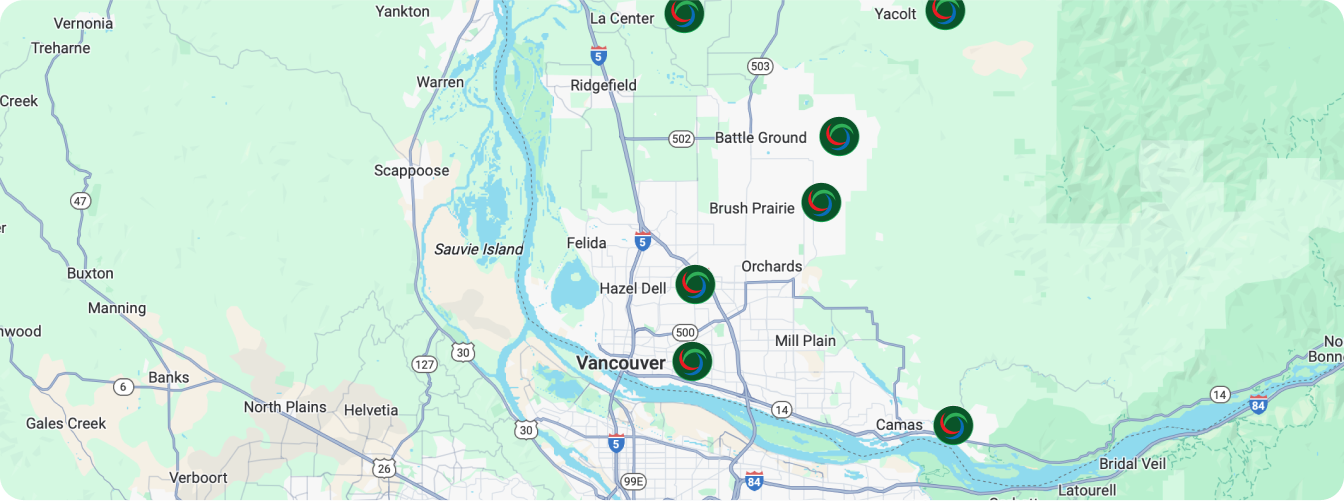
Air Conditioning Replacement in Orchards, WA
Replacing an aging or failing air conditioner is a significant decision for Orchards, WA homeowners. With warm, humid summers and occasional heat spikes, a reliable, properly sized cooling system keeps your home comfortable and protects indoor air quality.
.jpeg)
When to Replace vs Repair
Consider replacement when one or more of the following apply:
- Your system is more than 10–15 years old and showing increasing failures.
- Repair costs approach or exceed roughly 50% of a new system’s value.
- The compressor has failed or the system requires repeated refrigerant top-offs.
- The unit uses R-22 refrigerant (no longer produced for new equipment) making future service costly.
- Your home remains unevenly cooled, humidity control is poor, or energy bills keep rising despite repairs.
- You want a meaningful reduction in utility bills and improved comfort.
In Orchards, where summers can be humid and temperatures sometimes reach the 80s–90s, reliability matters. Older systems often struggle with humidity control and long run-times, making replacement the smarter long-term choice.
Common AC Replacement Triggers in Orchards, WA
- Intermittent compressor failures or a seized compressor
- Refrigerant leaks, especially in systems that require phased-out refrigerants
- Chronic short-cycling due to mismatched components or undersized equipment
- Excessive energy bills despite recent repairs
- Ductwork leakage or undersized ducts discovered during inspection
- Need for better humidity control and quieter operation
System Evaluation and Load-Sizing Process
A professional replacement begins with a detailed evaluation, not a one-size-fits-all quote. The process typically includes:
- Home inspection: measure square footage, ceiling heights, insulation levels, window types and orientation, attic ventilation, and envelope tightness.
- Occupancy and usage: number of residents, typical thermostat settings, and major internal heat sources (appliances, lighting).
- Duct assessment: measure airflow, check for leaks, and evaluate duct layout and static pressure.
- Load calculation: perform a Manual J cooling load to determine the precise cooling capacity needed (tons or BTUs). This avoids oversized or undersized systems that cause humidity problems or short cycling.
- Distribution design: if needed, perform Manual D for duct design recommendations.
Accurate load-sizing ensures the system runs efficiently, maintains consistent comfort, and preserves expected equipment life.
Energy-Efficient Equipment Options and SEER Comparisons
SEER (Seasonal Energy Efficiency Ratio) measures cooling efficiency. Higher SEER numbers mean lower electricity use for the same cooling output.
- Typical older systems: 8–10 SEER
- Standard modern systems: 14–16 SEER
- High-efficiency options: 18–22+ SEER
Estimated energy savings using the SEER ratio formula: percent reduction ≈ 1 - (SEERold / SEERnew).
- Replacing a 10 SEER with a 16 SEER yields about 37.5% less cooling energy.
- Replacing an 8 SEER with a 14 SEER yields about 42.9% less cooling energy.
Options to consider:
- High-SEER central AC units for max energy savings.
- Variable-speed compressors and multi-stage systems for improved humidity control and comfort.
- Heat pump systems: excellent for the Pacific Northwest climate, offering both efficient cooling and heat during shoulder seasons; compare SEER and HSPF ratings (heating performance).
- Matched system components (outdoor unit, indoor coil, and air handler/furnace) for peak efficiency.
Typical Replacement Timeline and Installation Steps
A standard central AC replacement generally follows these steps over 1–3 days (depending on complexity):
- Pre-install inspection and load calculations
- Permit acquisition if required by local code
- Disconnect and safely recover refrigerant from the old unit
- Remove and dispose of the old outdoor condensing unit and indoor coil/air handler as needed
- Inspect and, if required, modify or replace ductwork and electrical circuits
- Install new condenser, coil, and air handler or matched heat pump components
- Connect refrigerant lines, perform evacuation, and charge the system per manufacturer specs
- Start-up, calibration, and commissioning (airflow measurements, refrigerant pressures, thermostat programming)
- Final walk-through discussing system operation, filter type, and recommended maintenance
Projects with duct upgrades, non-standard locations, or permit delays can take longer.
Removal and Disposal of Old Equipment
Proper disposal in Washington includes:
- EPA-compliant refrigerant recovery: certified technicians must recover and recycle or reclaim refrigerants.
- Recycling of metal and components per local regulations.
- Proper disposal of insulation, oil, and other hazardous parts.Permits or disposal requirements may vary across Clark County and the City of Orchards; a licensed contractor follows local codes and documents refrigerant handling.
Available Rebates and Financing Options
Orchards homeowners may qualify for a mix of incentives:
- Utility rebates for high-efficiency equipment from regional providers (sometimes tied to SEER or heat pump conversions).
- State or federal incentives and tax credits when installing qualifying high-efficiency heat pumps or ENERGY STAR systems (program availability changes, so check current eligibility).
- Contractor financing: options often include low fixed-rate plans, deferred-interest offers, or extended terms to spread replacement costs.
Investigate current programs through your utility and state energy office to maximize savings before purchasing.
Warranty Coverage and What to Expect
Typical warranty components:
- Manufacturer parts warranty (commonly 5–10 years; some components like compressors may have longer coverage).
- Extended parts or compressor warranties available with registration and professional installation.
- Labor warranties vary by installer; confirm duration and what’s covered.Register equipment promptly and keep installation and service records to preserve warranty rights.
Expected Performance and Cost-Savings After Replacement
After installing a correctly sized, high-efficiency system in Orchards, homeowners typically see:
- Energy savings of 20–45% on cooling (varies by old vs new SEER and usage patterns).
- Better humidity control and more consistent temperatures.
- Quieter operation and longer equipment life when matched components and proper airflow are used.
- Reduced maintenance and fewer emergency repairs.
Estimated annual dollar savings depend on your cooling hours and local electric rates, but most homeowners commonly experience savings in the low hundreds to several hundred dollars per year; larger savings occur when upgrading from very low-SEER equipment or converting to a heat pump.
Maintenance and Long-Term Considerations
To protect your investment and warranty:
- Change filters regularly and follow the manufacturer’s maintenance schedule.
- Annual or biannual tune-ups extend life and sustain efficiency.
- Address duct leaks and insulation shortfalls to maximize system performance.
- Consider a maintenance plan that includes seasonal inspections and priority service.
Replacing an air conditioner in Orchards, WA is both a comfort and efficiency decision. With a thorough evaluation, accurate load-sizing, the right high-efficiency equipment, and proper installation, homeowners can expect reliable cooling, better humidity control, and meaningful energy savings for years to come.