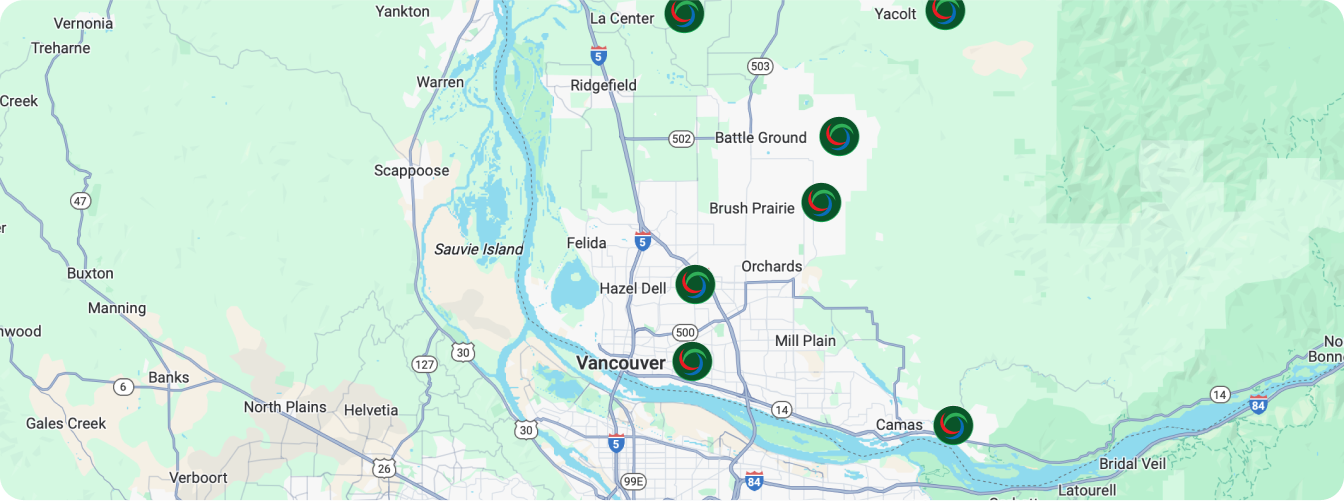
Mini Split Installation in Brush Prairie, WA
Mini split installations provide Brush Prairie homeowners with precise, zoned comfort and significant energy savings without the need for ductwork, a perfect solution for our damp Pacific Northwest conditions. Our professional service begins with a detailed site evaluation that considers room size and insulation to determine the correct BTU capacity and ideal indoor and outdoor mounting locations. We handle all installation steps, from meticulous refrigerant charging, vacuuming, and pressure testing to final start-up checks, ensuring reliable performance. The service concludes with providing all warranty documentation and expert maintenance guidance to keep your system efficient for year-round heating and cooling.
.jpeg)
Mini Split Installation in Brush Prairie, WA
A ductless mini split installation in Brush Prairie, WA gives homeowners precise comfort control, lower energy bills, and a simple way to heat and cool rooms without extending ductwork. For local homes that face damp Pacific Northwest winters, uneven heating, or rooms added during remodels, a properly installed mini split solves common comfort problems while delivering efficient, zoned climate control.
Why Brush Prairie homes choose ductless mini-splits
- Many older local homes lack ductwork or have leaky ducts that increase heating costs.
- Mild but damp winters make efficient, humidity-managing heating a priority.
- Finished basements, bonus rooms, sunrooms, and home offices often need independent temperature control.
- Mini splits provide zoned heating and cooling, reducing energy waste and improving comfort where it matters most.
Common mini split installation issues in Brush Prairie, WA
Homeowners often encounter the same hurdles when considering a mini split:
- Incorrect unit sizing leading to short cycling or insufficient heat in winter.
- Poor placement of indoor heads causing drafts or uneven airflow.
- Improper refrigerant charging after long line runs, which reduces efficiency.
- Inadequate condensate management that leads to leaks or freeze issues in cold snaps.
- Electrical circuits that are undersized or lack proper disconnects and grounding.
Our approach to site evaluation and sizing
A professional mini split installation starts with a thorough site evaluation specific to Brush Prairie homes. Technicians assess:
- Room square footage, ceiling height, window orientation, and insulation levels.
- Heat gains and losses using a load calculation to determine the correct capacity in BTU or tons.
- Best mounting locations for indoor heads that balance comfort and aesthetics.
- Outdoor unit placement that avoids heavy runoff, excessive shading, and ensures service access.
Correct unit sizing matters. Oversized systems short cycle and underperform on humidity control. Undersized systems cannot meet heat demand during cold, damp periods. A properly sized, inverter-driven mini split will maintain steady comfort and high efficiency.
Typical installation process
- Pre-install inspection and load calculation tailored to your specific rooms.
- Select indoor head type (wall-mounted, floor-mounted, ceiling cassette, or ducted) and outdoor unit based on capacity and aesthetic preferences.
- Mount indoor unit(s) and run a neat, concealed line set through a 2 to 3 inch hole finished with a weatherproof sleeve.
- Secure outdoor condenser with a level pad or brackets above likely water runoff and snow level.
- Connect refrigerant lines, electrical wiring, and condensate drain. Ensure a dedicated breaker and disconnect per code.
- Evacuate the lines with a vacuum pump to remove moisture and air. Perform a leak pressure test.
- Charge refrigerant to manufacturer specifications accounting for line length if additional refrigerant is needed.
- Start up the system and run performance checks including airflow, temperature split, and system pressures.
- Demonstrate controls and zoning functions. Provide documentation on warranty and operation.
Refrigerant charging, vacuuming, and leak testing explained
Proper refrigerant charging is essential for efficiency and longevity. After brazing or connecting line sets, the installer will:
- Pull a deep vacuum to remove air and moisture. Moisture in the system can form acids and damage components.
- Pressure test the system to verify there are no leaks.
- Add refrigerant only to the manufacturer specified amount, adjusted for any extra line length. For inverter systems, accurate charging is critical for the variable speed compressor to operate correctly.
Mounting, condensate, and electrical considerations
- Indoor head placement should allow unobstructed airflow and be at a height that optimizes comfort without creating cold drafts.
- Outdoor units should sit on a stable pad above expected water and snow levels and away from direct splash or heavy debris.
- Condensate drains must slope correctly to prevent backups; for some installations an internal condensate pump is required.
- Electrical installation should include a dedicated breaker, fused disconnect, and proper grounding to meet local codes and ensure safe operation.
System start-up and testing
A complete start-up includes:
- Verifying correct operating pressures and compressor function.
- Measuring temperature split between supply and return to validate cooling or heating capacity.
- Balancing airflow and checking remote control functions and any app integration.
- Running the system through heating and cooling modes to ensure consistent performance across seasonal conditions common to Brush Prairie.
Warranty details and documentation
Most mini split installations include manufacturer warranties for parts and compressors that vary by brand. Labor warranties depend on the installing contractor and local regulations. Homeowners should receive:
- Manufacturer warranty documentation and registration instructions.
- A written summary of the installation, including model numbers, serial numbers, and system capacities.
- Maintenance recommendations to keep warranties valid and performance optimal.
Energy savings and efficiency considerations
Ductless mini splits are heat pump systems that move heat rather than generate it, commonly achieving much higher efficiency than electric resistance heating. Key efficiency benefits:
- High SEER and HSPF ratings improve seasonal cooling and heating performance.
- Inverter compressors modulate output to match demand, reducing cycling losses and cutting energy costs.
- Zoned control prevents heating or cooling unused rooms, directly reducing utility bills.
- Reduced duct losses since air is delivered directly to the living space.
For Brush Prairie homes, the combination of efficient heating in cool months and mild summer cooling makes mini splits a cost-effective, comfortable solution year round.
Maintenance and long-term performance
Regular maintenance keeps a mini split operating efficiently and extends lifespan:
- Clean or replace indoor filters monthly or per manufacturer guidance during heavy use.
- Have annual professional checks that include refrigerant pressure verification, electrical connections, condensate line clearing, and outdoor coil cleaning.
- Keep outdoor units free of debris and vegetation and ensure good airflow around the condenser.
- Address minor performance changes early to avoid larger repairs.
A correctly executed mini split installation in Brush Prairie, WA delivers reliable, zoned comfort tailored to local climate needs while minimizing energy use. Proper site evaluation, accurate sizing, careful refrigerant handling, and thorough start-up testing are the components that determine system performance and longevity. With the right installation and ongoing maintenance, a ductless mini split can be one of the most efficient and flexible heating and cooling choices for Brush Prairie homes.