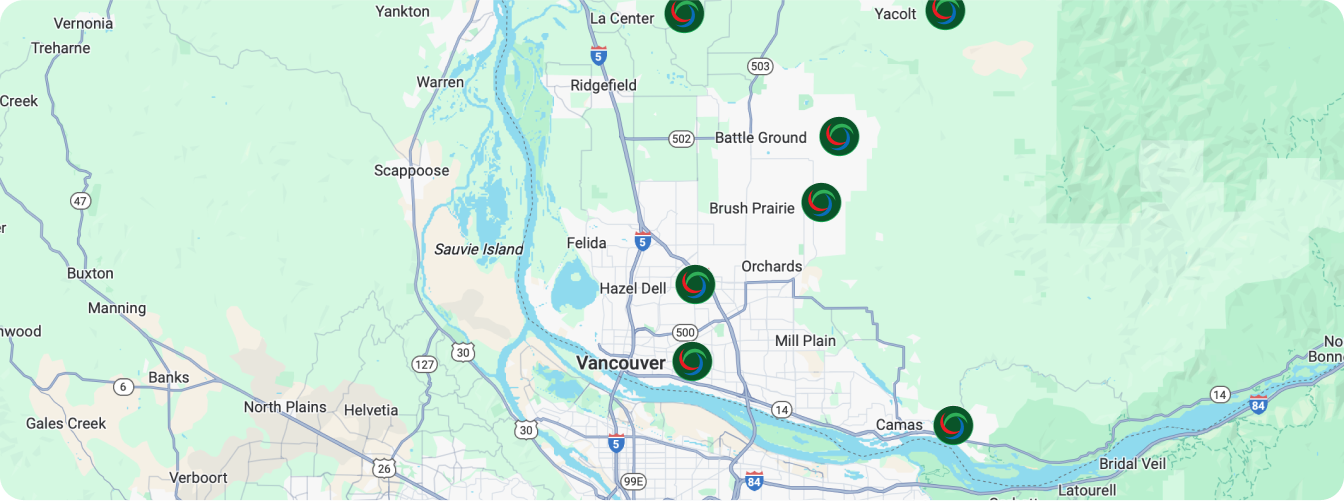
Mini Split Repair in Brush Prairie, WA
Mini split repair in Brush Prairie, WA keeps your ductless system reliable throughout wet winters and fluctuating shoulder seasons. Clear diagnostics, experienced repairs, readily available parts, and transparent warranty guidance are critical to restoring comfort and efficiency with minimal disruption to your home.
.jpeg)
Mini Split Repair in Brush Prairie, WA
Ductless mini-split systems are a popular, efficient choice for heating and cooling homes in Brush Prairie, WA. Whether you rely on a single-zone unit for an addition or a multi-zone system for whole-home comfort, timely mini split repair in Brush Prairie, WA keeps your system efficient and reduces the risk of larger failures.
Why timely mini split repair matters in Brush Prairie, WA
Brush Prairie’s Pacific Northwest climate means long, damp winters and occasional hot summer stretches. Mini-splits often work year-round as heat pumps, so wear and refrigerant leaks become more likely if problems are ignored. Prompt repairs:
- Restore efficient heating during cold, wet months
- Prevent compressor or inverter damage that leads to costly replacements
- Reduce energy use and maintain indoor comfort in variable spring/fall weather
- Preserve indoor air quality by keeping filters and blowers working properly
Common ductless mini-split issues in Brush Prairie homes
Many service calls are driven by a few recurring symptoms. Identifying the symptom narrows diagnostic steps and speeds repairs.
- Loss of cooling or heating
- Causes: refrigerant leak, failed compressor, inverter board issues, thermostat/remote failure
- Typical signs: unit runs but fails to reach setpoint, ice on indoor coil, or outdoor unit not cycling
- Poor airflow from the indoor head
- Causes: clogged filters, failing blower motor, blocked air path, fan capacitor issues
- Typical signs: weak airflow, uneven temperature in room, strange smells from the head
- Unusual noises
- Causes: loose mounting hardware, failing fan motor, compressor problems, refrigerant flow noise
- Typical signs: grinding, rattling, hissing, or loud vibration from indoor or outdoor unit
- Short cycling or frequent on/off cycles
- Causes: oversized unit, control board faults, refrigerant issues, sensor failure
- Typical signs: rapid cycling with little temperature change, increased electric bills
- Water leaks or drainage issues
- Causes: clogged condensate drain, misaligned drain pan, frozen coil, insulation deterioration
- Typical signs: water dripping from indoor unit, staining on walls or ceiling
How we diagnose mini split problems
A systematic diagnostic approach ensures the root cause gets fixed rather than applying a temporary bandage.
- Visual inspection: checks for obvious damage, ice buildup, loose wires, and blocked outdoor airflow
- Airflow measurement: confirms blower performance and ductless head operation
- Refrigerant pressure check: gauges refrigerant charge and looks for signs of leaks
- Electrical testing: inspects capacitors, fan motors, compressor startup components, and control boards
- Operational testing: monitors system through a full heat and cool cycle to replicate the issue
- Leak detection when needed: electronic detectors or dye may be used to pinpoint refrigerant leaks
Technicians will explain findings in plain language and outline repair options before starting any work.
Repair options and common replacement parts
Repairs are selected based on safety, system age, cost-effectiveness, and long-term reliability.
Common repair tasks:
- Recharge or repair refrigerant leaks (note: reliable leak repair is essential before adding refrigerant)
- Replace faulty capacitors, relays, contactors, or control boards (PCBs)
- Replace blower motors or indoor fan assemblies
- Repair or replace the outdoor fan motor or compressor components
- Replace expansion valves, service valves, or metering devices
- Clear or repair condensate drains and repair drain pans
- Replace remotes, sensors, or wired thermostats and communication cables
- Re-mount or re-seal indoor/outdoor units and refrigerant lines
Typical parts availability
- Many common components (filters, capacitors, fan motors, PCBs, remotes, and service valves) are stocked by local suppliers and manufacturers. Compressor replacements and some specialized inverter boards may require ordering and can take several days. Technicians will identify on-site repairable items versus parts that must be ordered.
Regulatory and safety notes
- Refrigerant handling requires certified technicians and adherence to EPA regulations. Repairs involving refrigerant recovery, leak repair, and recharge must be performed by licensed service personnel.
Warranty information and what that means for repairs
- Manufacturer warranties: Most manufacturers offer limited warranties that may cover compressors and major components for a defined period (compressor warranties commonly extend longer than standard parts coverage). Warranty terms vary by brand and model, and transferring or validating a warranty often requires documentation from the original installation.
- Parts and labor warranties: Reputable service providers commonly offer a workmanship warranty on repairs for a stated period. This protects against failures directly related to the performed repair.
- Warranty claims: If your unit is under manufacturer warranty, a technician will usually verify model and serial numbers and advise on coverage. If parts are covered by warranty, the repair may be processed through the manufacturer; labor for warranty work has variable coverage depending on the warranty terms.
What to expect during an on-site mini split service visit
- Arrival and identification: Technician arrives prepared with tools and common parts, confirms system information, and discusses reported symptoms.
- Initial inspection and testing: A diagnostic routine as described above is performed while you observe or receive a summary of findings.
- Repair plan review: The technician explains options, replacement parts required, estimated repair time, and warranty implications before proceeding.
- Performing repairs: Work is performed with attention to electrical safety, refrigerant regulations, and cleanliness. Where parts must be ordered, the technician will secure them and schedule a follow-up.
- Final testing and cleanup: After repairs, the system is tested through full cycles to verify performance. Work areas are left tidy, and the technician documents what was done.
- Documentation: You receive a clear summary of the repair, parts used, diagnostic readings (if applicable), and warranty terms for the work performed.
When repair may no longer be the best option
Repair is often the most cost-effective route, but replacement becomes reasonable when:
- The compressor or inverter fails on an older system with limited remaining life
- Multiple major components fail within a short period
- Repair costs approach or exceed the value of a new, more efficient system. Technicians can provide a comparative assessment if replacement is worth considering.
Ongoing maintenance and tips to reduce repair needs
- Change or clean filters regularly to protect fans and coils
- Keep outdoor unit clear of leaves, debris, and heavy vegetation common in Brush Prairie yards
- Schedule seasonal tune-ups to catch small issues before they become expensive
- Use the programmable features of your system to avoid short cycling
- Address odd sounds, smells, or performance dips promptly-early diagnosis lowers repair costs