Whole House Air Cleaners in Brush Prairie, WA
For Brush Prairie homes facing pollen, damp-season mold risk, and intermittent wildfire smoke, whole-house air cleaners offer a scalable, whole-home solution. Choosing the right technology involves balancing filtration efficiency, airflow compatibility with your furnace or air handler, ongoing maintenance needs, and local air quality patterns. Proper installation and routine service maximize indoor air quality improvements, protect HVAC equipment, and help maintain warranty coverage.
IAQ Whole House Air Cleaners in Brush Prairie, WA
Improving indoor air quality is a priority for many Brush Prairie homeowners who deal with seasonal pollen, damp winters, and occasional wildfire smoke. IAQ whole house air cleaners integrated with your HVAC system provide a centralized, low-maintenance way to reduce particulates, allergens, and pollutants throughout your home.
Why whole-house air cleaners matter in Brush Prairie, WA
Brush Prairie sits in a temperate Pacific Northwest climate with wet winters that encourage mold growth and springtime pollen that aggravates allergies. Summers can bring regional wildfire smoke that sends fine particulates into indoor spaces. A whole-house air cleaner treats the air for the entire ducted system rather than individual rooms, addressing:
- Spring and summer pollen and outdoor allergens
- Mold spores and humidity-driven biological contaminants
- Fine particulate matter (PM2.5) from smoke and wood-burning devices
- Pet dander and household dust
- Odors and some volatile organic compounds when combined with carbon media
Common IAQ whole house air cleaner issues in Brush Prairie, WA
Homeowners researching IAQ whole house air cleaners in Brush Prairie commonly look for solutions to:
- Persistent allergy symptoms despite regular cleaning
- Seasonal spikes in dust and pollen inside the home
- Lingering smoke smell after regional fires
- Reduced HVAC efficiency caused by clogged filters
- Concerns about mold or musty odors during wet months
Understanding which system addresses each problem helps set realistic expectations for performance and maintenance.
Types of whole-house air cleaners and how they filter air
Selecting the right technology depends on your goals (particulate removal, allergen reduction, odor control, or germ reduction). Common whole-house options include:
- Mechanical high-MERV filters (MERV 8 to 13+)
- Capture a wide range of particle sizes; higher MERV ratings trap finer particulates including many allergy triggers and some smoke particles.
- Installed in the filter cabinet at the return or in dedicated media housings.
- In-duct HEPA or bypass HEPA systems
- HEPA media removes 99.97% of particles 0.3 microns and larger when properly engineered; often installed in a dedicated bypass unit because full-duct HEPA can create high static pressure.
- Best for households with severe allergy or health concerns.
- Electronic air cleaners and electronic precipitators
- Use electrostatic charge to collect particles on plates; effective for fine particles but require regular cleaning of collector cells and may produce trace ozone with some models.
- Activated carbon or combination media
- Address odors and many VOCs; usually combined with particulate media for broad performance.
- UV germicidal lamps
- Installed near the coil or in ductwork to reduce microbial growth on HVAC components and in airflow; useful as adjunct technology for biological contaminants but not a standalone particulate solution.
Each technology has trade-offs in cost, maintenance, filtration efficiency, and impact on airflow.
Installation considerations with your furnace or air handler
Proper integration with your furnace or air handler is critical to achieve performance without compromising system operation:
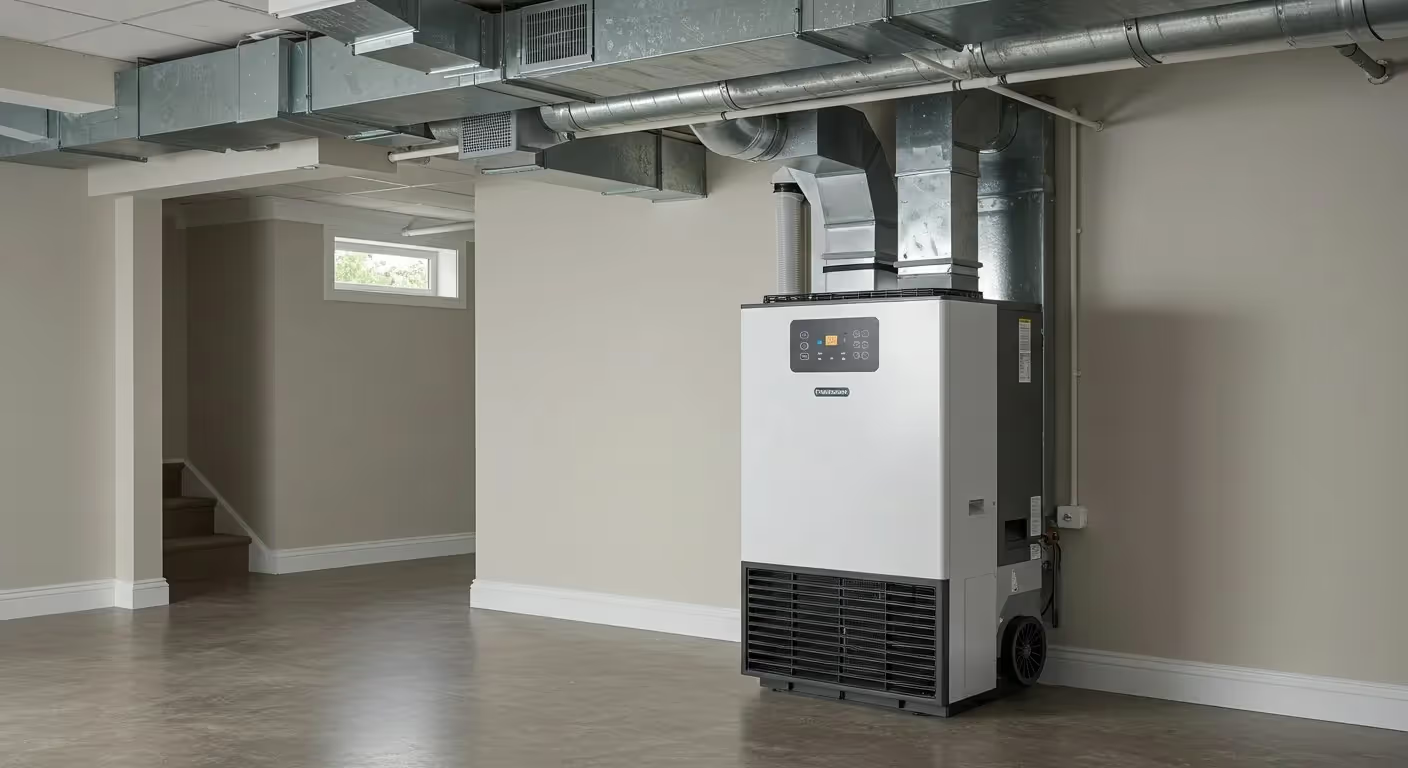
- Static pressure and airflow: Higher-efficiency media and HEPA can restrict airflow if the filter cabinet and blower are not sized for the added resistance. Verify the furnace or air handler’s fan capacity and, if necessary, select a low-restriction media or upgrade the blower.
- Filter location: Whole-house units are typically installed in the return duct, filter cabinet, or as a dedicated bypass system. Placement affects service access and pressure drop.
- Compatibility with variable-speed blowers: Variable-speed systems provide more consistent filtration performance across different fan speeds. Coordinate control wiring and settings for optimal operation.
- Mechanical clearance and ductwork condition: Adequate space for media housings, sealing of duct joints, and inspection of existing insulation and dampers are part of a professional installation.
- Safety and ozone: Electronic air cleaners should meet ozone emission limits; coordinate selection to avoid indoor ozone concerns.
- Warranty considerations: Improper installation or using filters that violate manufacturer specifications can affect HVAC warranties. Use systems and filters that are compatible with your furnace or air handler.
Maintenance, filter replacement, and expected service
Maintaining whole-house air cleaners keeps performance high and protects HVAC equipment:
- Filter replacement schedules
- Standard pleated filters: every 3 months or sooner in high-pollen or smoky conditions.
- High-MERV or media filters: often last 6 to 12 months depending on loading and system design.
- HEPA or special media: follow manufacturer recommendations; some require annual replacement.
- Electronic cleaners and UV lamps
- Electronic collection cells need periodic washing and inspection.
- UV bulbs have rated lifespans (commonly 9 to 12 months for peak output) and should be replaced per manufacturer guidance.
- Monitoring performance
- Look for increased dust on surfaces, rising pressure drop across the filter, or reduced airflow as indicators of service need.
- Service agreements
- Regular inspections by a qualified technician can include filter checks, fan and duct evaluation, and verification of static pressure and control settings.
Expected improvements to indoor air quality
A well-selected and correctly installed whole-house air cleaner in Brush Prairie can deliver measurable benefits:
- Significant reduction in airborne particulates and allergens, often lowering indoor PM2.5 and visible dust levels
- Noticeable symptom relief for many allergy and asthma sufferers
- Reduced odor and smoke residue when carbon media is included
- Less dust accumulation on furniture and HVAC components, which can extend the life and efficiency of the system
- Improved HVAC performance when filters are correctly matched and maintained, avoiding unnecessary strain on the blower
Results depend on system type, filter rating, home airtightness, and local outdoor conditions.
Warranty and service options
Manufacturer warranties typically cover defects in materials and limited components for a specified period. Key service and warranty considerations:
- Parts vs labor: Warranties commonly cover parts for a longer term than labor; check service terms for replacement labor coverage.
- Maintenance requirements: Many warranties require periodic professional maintenance to remain valid.
- Service plans: Comprehensive maintenance plans or tune-up programs often include annual inspection of IAQ equipment, filter change reminders, and priority service for replacements, which helps preserve warranty coverage and peak performance.