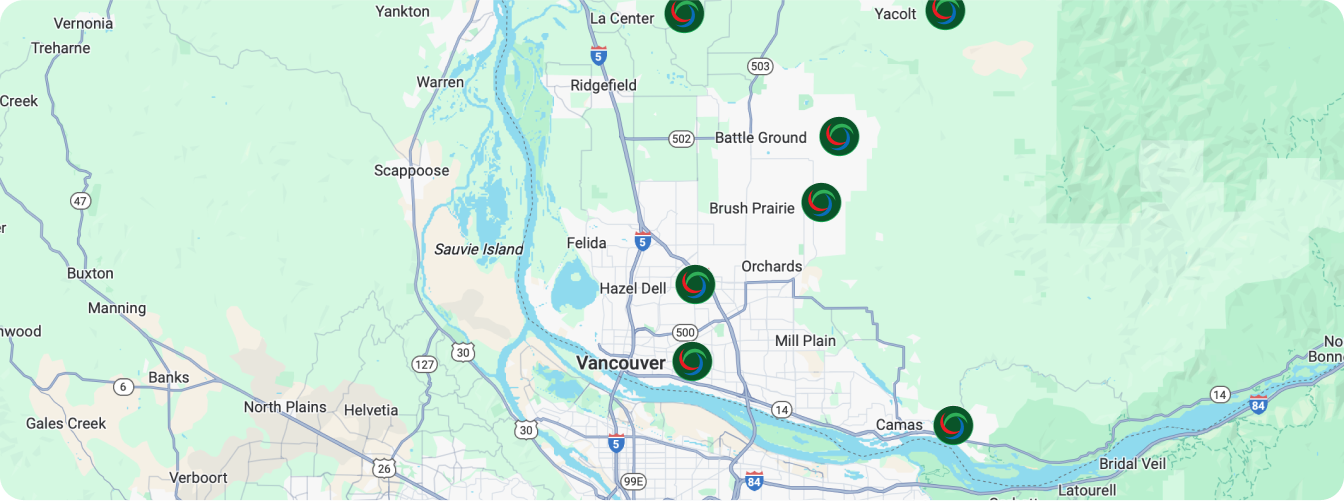
Air Conditioning Installation in Battle Ground, WA
Air Conditioning Installation in Battle Ground, WA
Installing a new air conditioning system is one of the most effective ways to improve comfort, indoor air quality, and energy efficiency in Battle Ground, WA homes. With Pacific Northwest summers that can swing from mild to unexpectedly hot and humid, a properly designed and installed AC keeps living spaces comfortable during heat waves while avoiding oversized systems that short-cycle and waste energy.
.jpeg)
Why proper installation matters in Battle Ground, WA
- Battle Ground’s climate: humid summers and moderate temperatures mean cooling needs vary and dehumidification matters as much as temperature control.
- Older homes: many local houses have older ductwork, limited attic insulation, or undersized electrical panels—factors that affect system performance.
- Efficiency goals: higher-efficiency systems with correct sizing deliver better comfort and lower operating costs, and they often qualify for rebates or incentives.
Common types of installations for Battle Ground homes
- Central split system (air handler + outdoor condensing unit) - best for homes with existing ductwork.
- Heat pump systems - increasingly popular in the Pacific Northwest because they both cool and heat efficiently.
- Ductless mini-split - ideal for additions, finished basements, or homes without ducts.
- Packaged rooftop or single-unit systems - used in certain remodels or light commercial settings.
Typical problems homeowners face before installation
- Undersized or leaking ducts that reduce capacity and raise energy bills
- Inadequate electrical capacity for modern air conditioners or heat pumps
- Poor attic ventilation or insulation that increases cooling load
- Incorrect equipment sizing leading to short cycling, humidity problems, and premature wear
Site assessment and system design
A thorough site assessment is the first step. Expect the installer to:
- Conduct a load calculation (Manual J) to determine the home’s actual cooling needs rather than guessing by square footage.
- Evaluate ductwork (Manual D) for size, layout, leakage, and insulation needs.
- Consider equipment performance (Manual S) to match the right model and efficiency level.
- Note attic insulation, window orientation, shading, and any localized heat gains (kitchens, sun rooms) that influence capacity.
A precise load calculation prevents oversizing, ensures adequate dehumidification, and helps select a unit with the right SEER rating for local climate and budget goals.
Unit sizing, refrigerant lines, and ductwork
- Proper unit sizing: Oversized units cool quickly but don’t remove humidity effectively; undersized units run constantly and may never reach setpoints. Both reduce comfort and system life.
- Refrigerant line installation: Correctly routed and insulated line sets, properly brazed fittings, and a tight vacuum and leak test are essential for reliable performance.
- Ductwork: Expect duct sealing, potential resizing, and insulation upgrades in Battle Ground homes to prevent conditioned air loss and improve airflow balance. New or retrofitted ducts are often needed when replacing older systems.
Electrical connections and safety
Installing an AC often requires:
- A dedicated circuit and appropriately sized breaker per manufacturer specs.
- A disconnect switch at the outdoor unit for safety and code compliance.
- Verification of grounding and proper wire gauge; panel upgrades may be necessary in older homes.
- Consideration for surge protection and compatibility with smart thermostats or dual-fuel controls.
System startup, charging, and testing
A professional startup includes:
- Pulling a vacuum and leak testing lines before charging refrigerant.
- Charging the refrigerant to manufacturer-specified levels and verifying with superheat/subcooling measurements.
- Measuring airflow, static pressure, and verifying matched airflow to the evaporator coil.
- Testing safety controls, condensate drainage, thermostats, and any zoning or dampers.
- Demonstrating operation and thermostat programming so homeowners understand system behavior-especially humidity control settings important in Battle Ground.
Warranties, maintenance, and long-term reliability
- Manufacturer warranties typically cover components (compressor, coil) for set periods; registered units may qualify for extended terms.
- Labor or installation warranty is an important complement that covers workmanship and should be clearly documented.
- Regular maintenance maximizes warranty coverage and system life: seasonal tune-ups, filter replacement, coil cleaning, and drainage checks.
- Consider a maintenance plan that includes priority service and scheduled inspections to maintain efficiency in humid months.
Financing and rebates (what homeowners in Battle Ground should know)
- Many homeowners use financing to spread the cost of high-efficiency systems; typical options include fixed monthly loans, deferred-interest plans, and energy-efficient improvement loans.
- Incentives may be available from local utilities or regional programs. Homeowners should explore local utility rebates (for example, programs through Clark County or nearby utilities) and manufacturer or retailer promotions for ENERGY STAR or high-SEER systems.
- Federal or state-level incentives for electrification and high-efficiency heat pumps may also apply; eligibility often depends on system type, efficiency, and installer certification.
Installation timeline and disruption
- Typical residential installations take 1–3 days depending on system complexity, duct modifications, or electrical work.
- Expect temporary access needs to attic or exterior units; installers should protect flooring and landscaping during work.
- Final testing and customer orientation usually occur on the last day, ensuring you leave with system operation knowledge.
Long-term benefits and maintenance tips
- Properly installed systems deliver consistent comfort, better humidity control, and lower energy bills over time.
- Simple homeowner actions extend system life: change filters regularly, keep outdoor unit clear of vegetation, and schedule annual preseason tune-ups.
- For Battle Ground homes, ensuring attic insulation, sealing leaks, and addressing shading and ventilation can reduce cooling loads and improve overall performance.
A correctly specified and professionally installed air conditioning system tailored to Battle Ground’s climate and your home’s characteristics resolves comfort issues, improves indoor air quality, and protects your investment for years to come.