Whole House Air Cleaners in La Center, WA
La Center homeowners can significantly improve indoor air quality with whole-house air cleaners that centrally filter every room. A professionally installed whole-house air cleaner that integrates with your HVAC system is one of the most effective, low-maintenance ways to reduce dust, allergens, pollutants, and odors throughout your entire home.
IAQ Whole House Air Cleaners in La Center, WA
Indoor air quality matters in La Center homes. Between Pacific Northwest damp winters that encourage mold growth, spring and summer pollen from fir and cedar, occasional wildfire smoke in late summer, and dust from rural roads and wood burning, residents face a wide mix of particles, allergens, odors, and biological contaminants. A professionally installed whole-house air cleaner that integrates with your HVAC system is one of the most effective, low-maintenance ways to reduce dust, allergens, pollutants, and odors throughout your entire home.
Why a whole-house air cleaner is the right choice for La Center, WA homes
A whole-house system treats the air that circulates through your HVAC ductwork so every room benefits. Compared with portable room units, whole-house solutions:
- Treat air centrally and continuously, reducing dust and allergens on surfaces and in the breathing zone
- Protect HVAC components by reducing dust build-up on coils and blower motors, improving efficiency
- Provide consistent performance across the home, not just in one room
- Work with the home’s ventilation pattern so filtration happens whenever the system runs
For La Center residents dealing with seasonal pollen, damp-weather mold spores, and periodic wildfire smoke, an in-duct whole-house air cleaner reduces exposure to those common local contaminants.
Common IAQ issues in La Center homes
- Increased household dust and visible residues on furniture and registers
- Seasonal allergy flares from tree and grass pollen
- Mold spores in basements, crawl spaces, and poorly ventilated bathrooms
- Smoke and fine particulates from wildfires or wood stoves
- Odors and volatile organic compounds (VOCs) from cleaners, paints, or stored chemicals
- Pet dander and household allergens that circulate through forced-air systems
How whole-house air cleaners integrate with your HVAC system
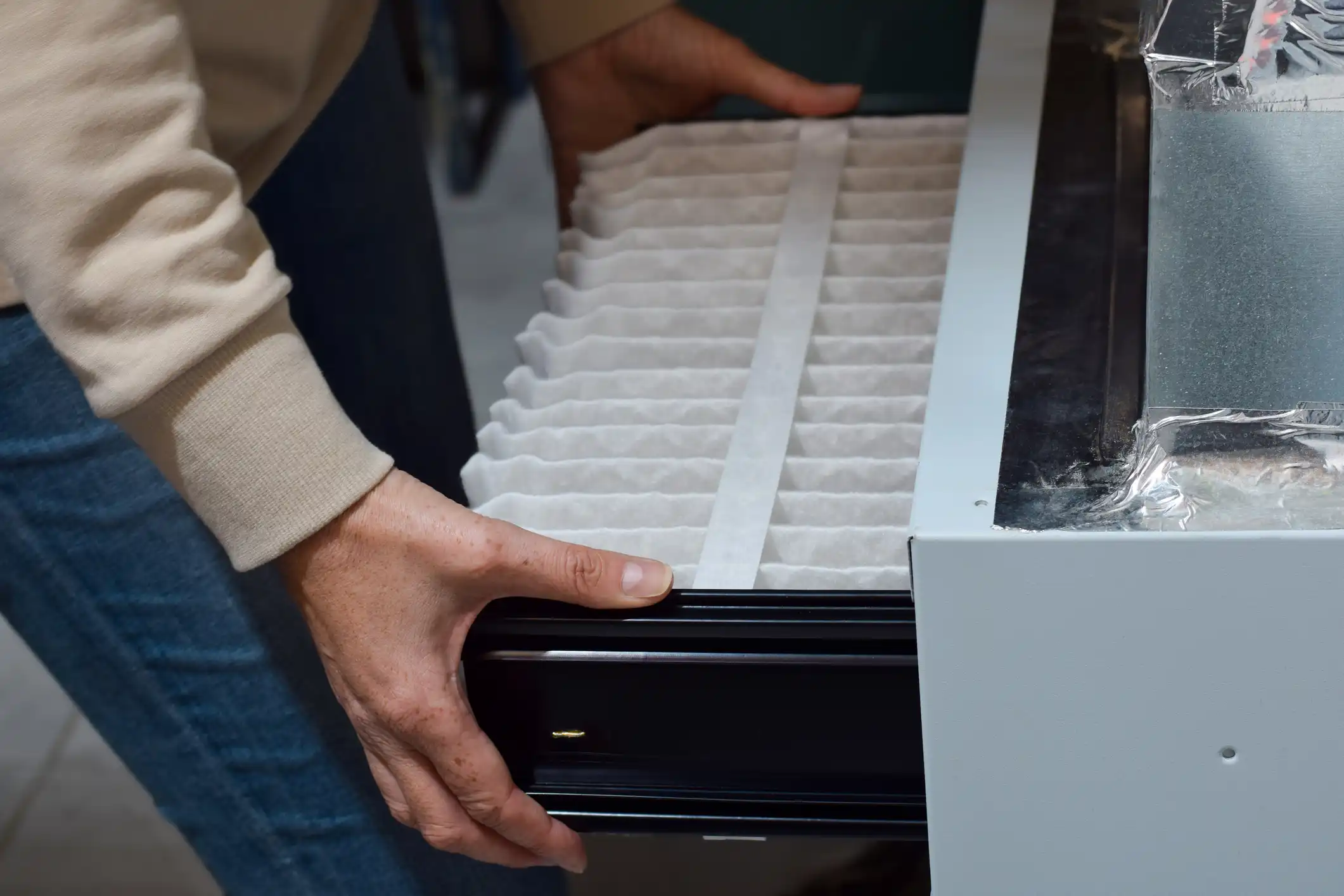
Whole-house air cleaners are installed in the ductwork-most commonly at the return plenum or inside a dedicated cabinet near the air handler. They operate with your furnace or air handler so filtration occurs whenever the blower circulates air. Integration points include:
- Mounting on the main return air duct or in the return plenum
- Hardwired or low-voltage control tied to the HVAC blower or a smart controller for runtime scheduling
- Bypass or straight-through cabinet designs depending on available space and static pressure requirements
- Options for adding pre-filters to protect higher-efficiency media and reduce maintenance frequency
Proper integration considers airflow, static pressure, and blower capacity so the cleaner captures contaminants without degrading system performance.
Types of whole-house air cleaners and filter options
Choosing the right technology depends on the contaminants you want to remove, existing HVAC limitations, and maintenance preferences.
- High-efficiency media filters (MERV 8–16)
- MERV-rated filters capture particles by size. MERV 13 is commonly recommended for homes with allergy or smoke concerns because it captures a large portion of pollen, mold spores, and many fine particles.
- Higher MERV equals better capture but also higher resistance to airflow; HVAC compatibility is essential.
- HEPA-style whole-house systems
- True HEPA removes very small particles (down to 0.3 μm) at very high efficiency. Whole-house HEPA requires a system designed to handle the pressure drop and usually a dedicated fan or cabinet.
- Consider if you need the highest particulate removal and if your air handler can handle the load.
- Electronic air cleaners and ionizers
- Use charged plates or fields to remove particles from the air. They can be effective for fine particles and reduce dust; some models require periodic plate cleaning.
- Electronic cleaners can produce small amounts of ozone in certain designs—choose certified devices and understand tradeoffs.
- Activated carbon or carbon-enhanced media
- Effective for odors, smoke gases, and VOCs. Often combined with particulate filters for more complete treatment of wildfire smoke and household odors.
- UV germicidal lamps
- Installed near the coil or in the air handler to reduce microbial growth on HVAC components and inactive airborne bacteria/viruses. UV complements filtration but does not remove particles on its own.
Installation process for La Center homes
A typical professional installation follows these steps:
- On-site assessment of the home and HVAC system, including airflow measurements and static pressure checks
- Recommendation of technology and filter rating suited to local risks (pollen, mold, smoke)
- Sizing the cleaner and confirming duct access and clearance (return plenum, furnace cabinet, or remote cabinet location)
- Installing the unit with secure duct connections, sealing joints, and integrating controls with the air handler
- Checking blower performance and static pressure to ensure the system operates safely and efficiently
- Demonstrating filter access and explaining maintenance routines
Local factors such as tight attic spaces, existing duct layout, and whether homeowners use wood stoves or have pets influence placement and product choice.
Maintenance requirements and service expectations
Routine care keeps performance high and minimizes operating issues:
- Replace media filters on a schedule (often every 3–12 months depending on MERV rating, local dust load, and occupancy)
- Clean electronic collector plates per manufacturer instructions (often every 3–12 months)
- Replace UV lamps annually for reliable germicidal output
- Inspect seals, duct connections, and the air handler annually to prevent bypass and pressure loss
- Monitor system performance: unusual noise, reduced airflow, or higher energy use can indicate a clogged filter or pressure issues
Documenting maintenance and keeping filter change records ensures consistent indoor air quality improvements.
What to expect: measurable indoor air quality improvements
While exact results vary with home size, occupancy, and system runtime, owners typically see:
- Significant reduction in visible dust and dust build-up on surfaces
- Noticeable decrease in seasonal allergy symptoms for many residents when using MERV 13 or higher filtration
- Substantial removal of smoke particles and odors when media filtration is combined with activated carbon or when using HEPA-level capture with adequate airflow
- Longer intervals between HVAC cleanings due to less dust on coils and blowers
Numeric guidance: properly selected media filters (MERV 13) can capture large percentages of pollen, mold spores, and many fine particles; HEPA-level systems can remove the majority of particles down to 0.3 μm when installed with appropriate airflow. Exact percent reduction depends on runtime and air changes per hour.
Long-term benefits and smart maintenance tips
- Better indoor comfort and fewer allergy triggers during La Center’s pollen seasons and damp months
- Reduced HVAC wear and improved energy performance when filters are matched to system capability
- Cleaner home surfaces and fewer dust-related maintenance tasks
- For smoke-prone summers, choose combined particulate + activated carbon strategies to address both particles and odors
Smart tips:
- Use higher-efficiency filtration during peak pollen or smoke seasons and a lighter pre-filter year-round to balance airflow
- Run the HVAC fan intermittently during high-pollution events to increase air exchanges through the cleaner
- Record filter changes and annual inspections to maintain warranty and system performance
A correctly specified and installed IAQ whole-house air cleaner tailored to La Center conditions delivers measurable reductions in dust, allergens, and pollutants while protecting your HVAC investment and improving comfort.