
Whole House Air Cleaners in Battle Ground, WA
Whole-house air cleaners provide Battle Ground homes with a tailored solution for improved indoor air quality, addressing challenges from the damp climate and wildfire seasons. These systems integrate directly with your HVAC to remove particles at the source. We offer a variety of options including True HEPA, high-efficiency media filters, electronic cleaners, UV germicidal lights, and hybrids, each with specific particle removal performance. Proper sizing is crucial, and we use metrics like house volume and ACH (Air Changes per Hour) targets to ensure efficiency. Our professional installation covers all necessary steps, including expert placement and wiring, and we provide clear maintenance schedules for filter replacement and upkeep.
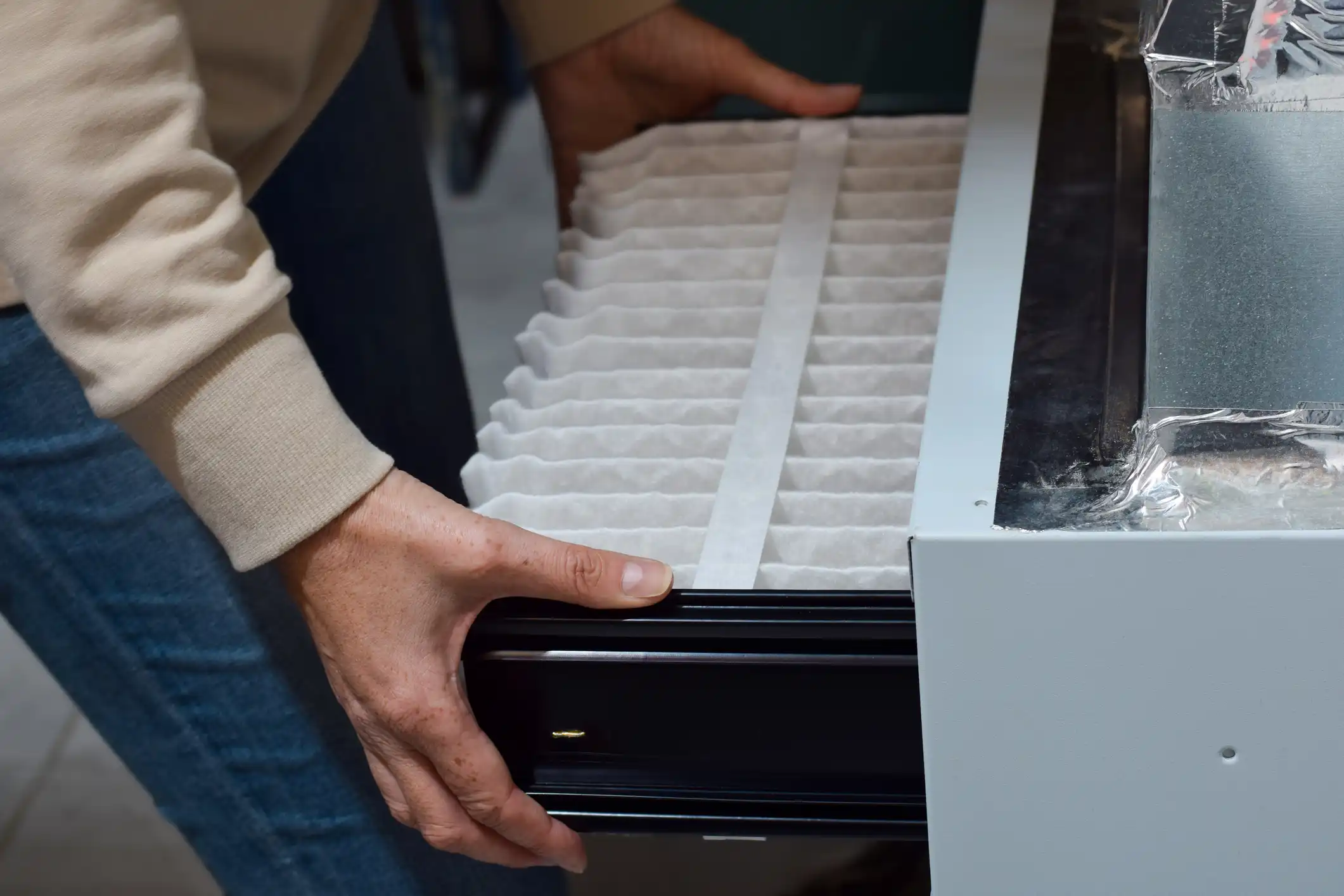
Whole House Air Cleaners in Battle Ground, WA
Cleaner indoor air is one of the most effective improvements you can make for health, comfort, and HVAC performance in Battle Ground, WA. Whole-house air cleaners that integrate with your HVAC system reduce allergens, dust, wildfire and wood smoke particles, and microbial growth that thrive in our Pacific Northwest climate.
Why whole-house air cleaning matters in Battle Ground, WA
- Battle Ground’s mild, damp climate encourages indoor mold and higher humidity in cool months; media filtration plus proper ventilation helps control spores.
- Spring and summer bring tree and grass pollens that trigger seasonal allergies for many residents.
- Late-summer wildfire smoke events can sharply elevate fine particle (PM2.5) levels; whole-house filtration reduces indoor smoke penetration and protects sensitive household members.
- Residents using wood stoves or fireplaces benefit from in-duct filtration that lowers soot and ash distribution.
Whole-house air cleaner options (what they do and when to choose them)
- True HEPA (in a dedicated whole-house HEPA system or high-efficiency stand-alone unit tied to the HVAC): Removes 99.97% of particles down to 0.3 micron. Best for allergy sufferers, asthma, and smoke. Requires adequate fan capacity and proper sealing.
- Media filter systems (high-MERV filters installed in the air handler or a dedicated housing): Available in MERV 8–16. MERV 13 is often the balance point for capturing pollen, pet dander, and many smoke particles without excessive pressure drop. Good for year-round particulate control with minimal added equipment.
- Electronic air cleaners / electrostatic precipitators: Use charged plates to capture particles. Can be very effective for fine particles but require regular cleaning and careful selection to ensure low ozone emissions. Consider only certified, low-ozone models.
- UV germicidal lights: Installed near the coil or ductwork to inactivate mold, bacteria, and some viruses. UV is not a particulate filter—use it as a complement for microbial control, especially in damp houses or where coil mold reduces efficiency.
- Hybrid systems: Combine media filtration + electronic or UV for particle capture plus microbial control. These offer broad IAQ improvements for homes with mixed concerns (allergy + mold + intermittent smoke).
Common IAQ issues in Battle Ground homes
- Seasonal pollen and pet dander causing allergies
- Mold and musty odors from high indoor humidity and damp basements
- Fine particles from wildfire smoke, fireplaces, or outdoor wood burning
- Dust accumulation and HVAC coil fouling that reduces system efficiency
Sizing and selecting the right unit
- Start with house volume: square footage × ceiling height = cubic feet. For a typical 2,000 sq ft home with 8 ft ceilings, volume = 16,000 cu ft.
- Determine target air changes per hour (ACH): for general comfort 0.5–1 ACH; for allergy relief or smoke events target 4–6 ACH. Higher ACH gives faster particle reduction.
- Convert ACH to required airflow: Required CFM = (Volume × ACH) / 60. Example: 16,000 cu ft, 4 ACH → (16,000 × 4)/60 = 1,067 CFM.
- Check your HVAC blower capacity and static pressure limits. High-efficiency filters and HEPA housings add pressure drop; ensure the furnace/air handler can handle the added load or consider a dedicated fan module.
- Match filter/cleaner performance to needs: choose HEPA or MERV 13+ for wildfire smoke and severe allergies; media filters or a hybrid system for balanced everyday performance.
Integration with existing HVAC systems
- In-duct media filters typically replace the standard filter at the air handler. Confirm filter frame size and allowable thickness (1", 4", etc.) for effective MERV upgrade.
- Whole-house HEPA systems often mount in a dedicated housing near the air handler with either the existing blower sufficing or a supplemental fan added.
- Electronic air cleaners and UV lamps are installed at the air handler or duct return; electrical wiring and access for maintenance must be considered.
- Proper sealing, ductwork inspection, and return-air design are critical. Leaky ducts bypass filtration and reduce effectiveness.
Installation steps (typical process)
- Site assessment: evaluate home volume, existing HVAC capacity, duct layout, and indoor complaints (allergy, odor, mold).
- System selection and sizing: choose unit type and determine if blower upgrades or bypass housing are required.
- Preparation: shut down system, access air handler/duct, verify electrical connections.
- Mounting and sealing: install filter housing, HEPA module, electronic cell, or UV lamp; seal penetrations and verify airflow direction.
- Commissioning: test airflow, static pressure, and if available, particulate reduction with handheld monitors; verify UV lamp operation and electronic cleaner ozone levels if applicable.
- Customer education: show maintenance points, filter replacement intervals, and any switches or prefilter locations.
Filter replacement and maintenance
- HEPA systems: Inspect prefilters monthly; replace prefilters 3–12 months depending on loading. HEPA element often lasts 1–3 years depending on load and system design.
- Media filters (MERV 8–13): Inspect every 1–3 months. Replace commonly every 6–12 months; high smoke/pollen periods may shorten life.
- Electronic cleaners: Clean collector plates every 1–3 months, depending on loading. Replace or service as manufacturer recommends.
- UV lamps: Replace annual or per manufacturer lamp life (commonly 9–12 months for germicidal output).
- Keep coils and drain pans clean; dirty coils reduce efficacy of UV and filtration and lead to microbial regrowth.
Performance expectations and efficiency
- True HEPA typically removes 99.97% of particles ≥0.3 micron when air passes through the HEPA element. Whole-house effectiveness depends on ACH and airtightness.
- MERV 13 media filters capture a large percentage of 0.3–1.0 micron particles and are effective for pollen, many smoke particles, and respirable dust with lower pressure drop than HEPA.
- Electronic cleaners can reduce fine particles effectively but require maintenance to sustain performance and must meet ozone safety standards.
- Properly designed systems improve HVAC efficiency by reducing coil fouling and dust buildup; however, very high-MERV filters or HEPA installations can increase fan energy use if blower upgrades are required.
Warranty and brand considerations
- Choose units from manufacturers with clear warranty periods and documented performance (test data or certifications). Look for UL/ETL listings and manufacturer support documentation.
- For electronic and UV systems, verify ozone emission data and lamp life warranties. Verify that media filters and HEPA housings have clear filter compatibility and sealing details.
Financing and common payment structures
- Many homeowners use financing for whole-house IAQ upgrades. Typical structures available through HVAC contractors and third parties include:
- Low APR installment plans with fixed monthly payments
- Deferred interest plans (no interest if paid in full within a set term)
- Short-term 0% interest offers for equipment purchases
- Financing terms vary; compare APRs, payment length, and deferred interest terms to match budget and long-term savings from improved efficiency.
Long-term benefits and practical tips
- Expect reduced allergy symptoms, lower dust levels, fewer odors, and better protection during wildfire smoke events when systems are properly sized and maintained.
- Pair filtration with humidity control and regular HVAC maintenance for best IAQ results in Battle Ground’s climate.
- Keep simple maintenance routines: check filters monthly during high-use seasons, replace prefilters regularly, and schedule annual system checks for fans, seals, and UV lamps.
Well-chosen and properly installed whole-house air cleaners tailored to Battle Ground homes deliver measurable health and comfort improvements. Proper sizing, attention to pressure drop and blower capacity, and a routine maintenance plan are essential to realize the full benefits over time.




