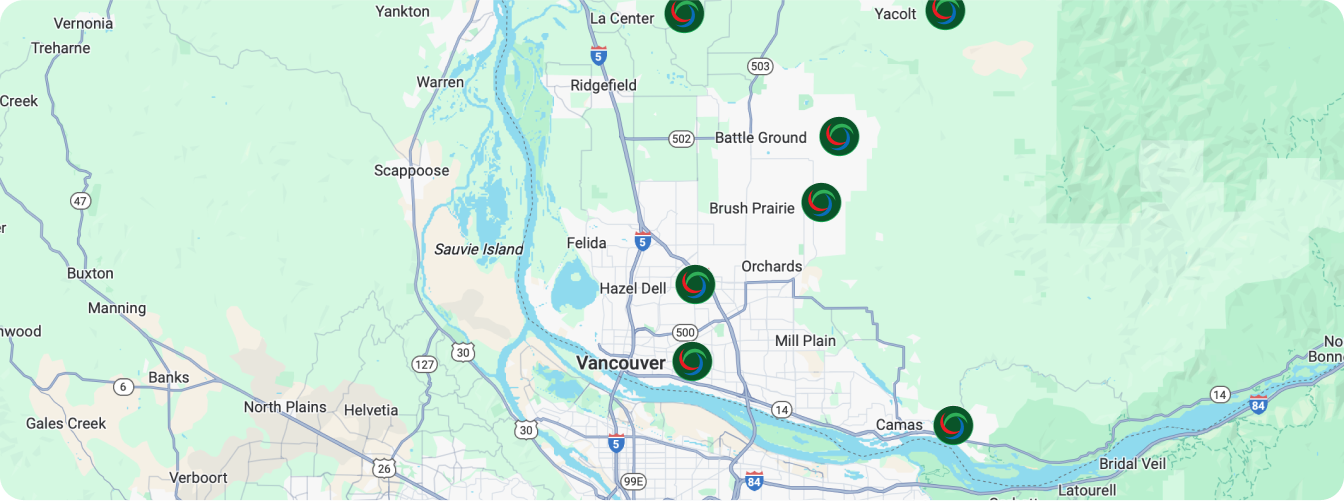
HRV Systems in Woodland, WA
For homeowners in Woodland, WA, an IAQ-focused HRV system provides balanced ventilation that is crucial for our region's cool winters and smoky summers. By exchanging stale indoor air for fresh, filtered outdoor air while recovering heat, these systems improve indoor air quality with minimal energy loss. We offer a range of solutions, including whole-house and compact/point HRVs, with tailored installations for both new construction and retrofits. Our comprehensive service covers everything from expert sizing and seamless installation to control options, routine maintenance, and seasonal commissioning. We also provide clear guidance on when to choose an HRV over an ERV to ensure you receive the expected indoor air improvements.

HRV Systems in Woodland, WA
Healthy indoor air and energy-efficient ventilation matter in Woodland, WA. With cool, damp winters, occasional wildfire smoke in late summer, and increasingly airtight homes, Woodland residents face two common problems: stale, humid indoor air that encourages mold, and poor ventilation that wastes energy when windows are opened to refresh the house. IAQ HRV systems in Woodland, WA provide balanced ventilation that exchanges stale indoor air for filtered outdoor air while recovering most of the heating energy - improving comfort, reducing allergens and odors, and limiting energy loss.
Why an HRV matters for Woodland homes
- Balanced ventilation prevents depressurization that can draw soil gases or cold drafts into the home.
- Heat recovery reduces how much extra heating is needed when bringing in outdoor air through mechanical ventilation instead of window airing.
- Filtration reduces particles from wildfire smoke and urban dust before they enter the living space.
- Controlled, continuous ventilation helps limit humidity spikes and condensation where indoor moisture and cool surfaces meet, lowering mold risk common in Pacific Northwest climates.
How HRVs work (simple, practical explanation)
An HRV (heat recovery ventilator) moves two air streams at once: stale, warm indoor air is exhausted to the outside while fresh outdoor air is drawn in. Inside the unit, a heat-exchange core transfers most of the sensible heat from the outgoing air to the incoming air. The result is fresh air with much of the energy preserved, so your heating system does not have to work as hard to maintain comfort. HRVs typically include replaceable filters and fans and can be set for continuous low-rate ventilation or boosted for higher airflow when needed.
Common HRV system types and service categories
- Whole-house central HRVs integrated with existing ductwork or a dedicated duct run
- Compact/point HRVs for homes without central ducts (bathroom and kitchen focused)
- New construction HRV installation vs retrofit installation in existing homes
- HRV replacement or upgrade for outdated ventilators or units failing efficiency or noise standards
- Seasonal commissioning and maintenance services to keep performance optimal
Common HRV issues in Woodland and what they mean
- Reduced airflow or uneven ventilation: often due to clogged filters, dirty core, or duct blockages. Results in poor air exchange and can let indoor pollutants build up.
- Excessive noise or vibration: loose mounts, aging fans, or improper duct sizing increase sound and lower homeowner satisfaction.
- Frost or freezing on the core in cold spells: many HRVs have defrost controls; units without proper frost protection will reduce airflow until thawed.
- Imbalanced intake/exhaust rates: causes pressure differences that can pull contaminants from attics or crawl spaces.
- Inadequate filtration for smoke events: standard filters may not capture fine wildfire smoke particles; higher-MERV or activated carbon options are sometimes needed.
Sizing and installation basics (what to expect)
- Proper sizing is based on home square footage, number of bedrooms/occupants, and local ventilation standards (for example meeting ASHRAE 62.2 continuous ventilation guidance). Typical single-family homes in the Woodland area commonly fall in the 50 to 150 CFM range, but exact capacity must match your home’s volume and usage.
- Installation choices include tying the HRV into existing supply and return ducts, using dedicated intake and exhaust runs, or placing point units in high-moisture rooms. Correct duct layout and minimal bends preserve performance and reduce noise.
- Controls and features to consider: continuous low-speed operation with boost options, programmable timers, humidity sensors, and filters rated for smoke and pollen protection.
- Location matters: intake should be placed away from vehicle exhaust and rooflines, and condensate drainage must be provided where units will generate moisture during defrost cycles.
Maintenance: keep performance high and problems low
- Filters: check every 1 to 3 months; replace or clean per manufacturer recommendations. During wildfire season, consider higher-efficiency filters and more frequent changes.
- Core and fans: inspect and clean annually. A dirty core reduces heat-recovery efficiency and airflow.
- Drain and seals: clear condensate drains and inspect seals to prevent leaks and microbial growth.
- Operation check: test airflow rates and verify balanced intake and exhaust at least once per year; rebalance if rooms show persistent odors or humidity problems.
- Frost protection: verify defrost function before winter; install preheat or frost controls on units serving very cold exposures.
Expected improvements to indoor air quality for Woodland residents
- Noticeably fresher indoor air with reduced cooking, bathroom, and pet odors.
- Lower levels of airborne particulates and allergens when using appropriate filtration, which helps allergy and asthma sufferers.
- More consistent indoor humidity and fewer condensation-prone surfaces, which helps protect woodwork and reduces mold potential during damp months.
- Better protection from outdoor smoke events when combined with upgraded filters or supplemental filtration strategies.
- Energy savings compared with uncompensated ventilation (opening windows or exhaust-only systems) because recovered heat reduces added heating demand.
When to consider HRV vs alternatives
- HRV is especially effective in cooler climates and for homes primarily concerned with recovering heating energy while ventilating. Woodland’s cool winters make HRV a strong option for year-round efficient ventilation.
- If indoor humidity control is the top priority (for very humid summers or specific moisture problems), an ERV (energy recovery ventilator) that transfers some moisture may be evaluated instead. Many modern IAQ strategies compare HRV and ERV performance to choose the most suitable solution for a specific house.
Long-term benefits and practical tips
- Investing in a correctly sized, well-installed HRV improves indoor comfort and protects building materials by stabilizing indoor air conditions and reducing pollutant build-up.
- Combine an HRV with regular HVAC maintenance to maximize system efficiency and occupant health.
- During smoke events, reduce outdoor intake speeds or switch to recirculation plus high-efficiency filtration to keep indoor air clean without losing heat unnecessarily.
An IAQ-focused HRV system tailored to Woodland, WA homes brings balanced ventilation that aligns with local climate realities: it helps manage damp winters, improves protection from seasonal smoke, and preserves energy while keeping indoor air fresh. Proper sizing, installation, and routine maintenance are the keys to sustained performance and measurable indoor air quality improvements.