
Winterizing Your La Center Central Air Unit the Right Way
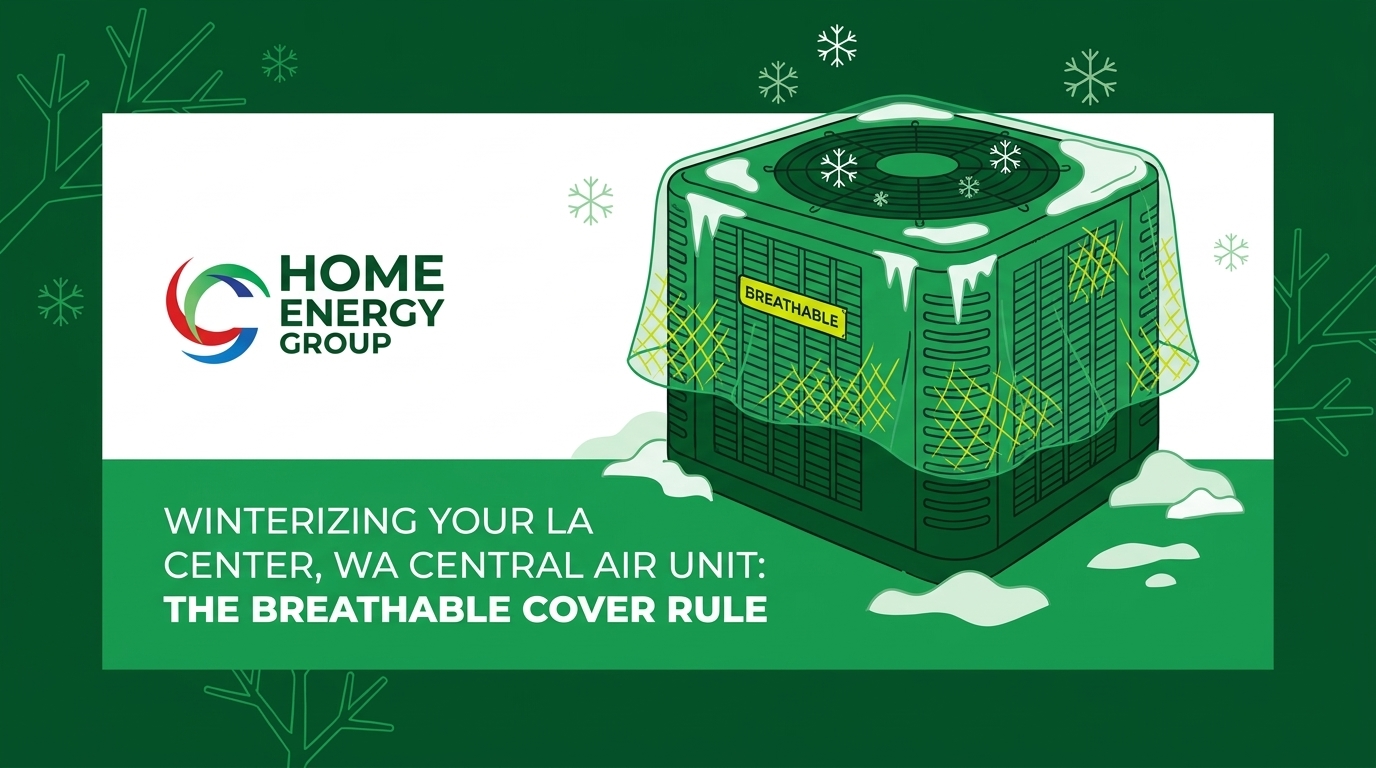
The Costly Mistake La Center Homeowners Make Every Fall
That lingering dampness around your outdoor unit isn't just morning dew—it is a sign that your system might be suffocating. Winterizing Your La Center Central Air Unit the Right Way is crucial, but many homeowners accidentally destroy their equipment by trying to protect it. You want to shield your expensive investment from the upcoming harsh weather, so you grab a heavy-duty plastic tarp and wrap it tight. Unfortunately, this well-meaning instinct is one of the most damaging mistakes you can make in our specific regional climate. Standard national advice simply does not apply to the persistent wet weather of the Pacific Northwest, and you need a different strategy to keep your equipment safe.
For comprehensive air conditioning services, or to enroll in a preventative HVAC maintenance plan, reach out to our local team today.
When the temperature starts to drop, it is completely natural to want to bundle up your home's exterior features. You cover your patio furniture, you store your grill, and you look at your central air conditioner sitting exposed in the yard. The logical next step seems to be wrapping it up securely. Homeowners in La Center, WA, frequently face this exact decision point: should you leave the unit completely exposed to the elements, wrap it tightly in a waterproof tarp, or invest in a specialized breathable cover?
The instinct to protect: It makes sense that you want to keep rain, snow, and debris out of a machine that costs thousands of dollars. However, air conditioners are not built like patio chairs. They are highly engineered pieces of mechanical equipment designed specifically to live outdoors. Their outer casings are manufactured with weather-resistant finishes, and their internal components are built to handle direct rainfall.
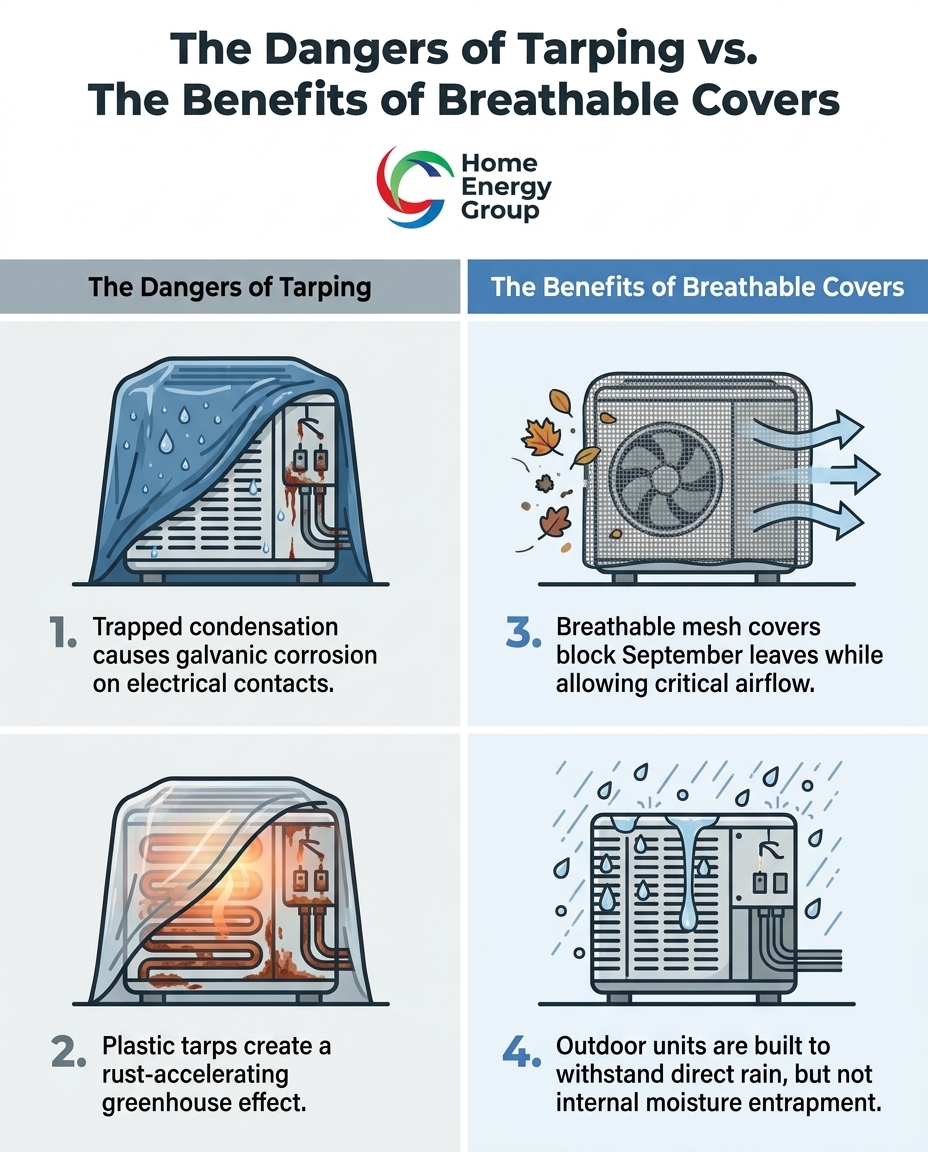
The concrete problem: When you wrap that metal box in a non-breathable plastic sheet, you are no longer protecting it from the outside weather. Instead, you are creating a destructive micro-climate on the inside. By sealing off the natural airflow, you are trapping ground moisture and internal condensation inside the cabinet. In our region, this mistake leads directly to rusted coils, corroded electrical contacts, and premature system failure. Understanding how to navigate this seasonal shift is the key to extending the lifespan of your cooling system.
Why the Pacific Northwest Climate Demands a Different Approach
If you lived in a region with dry, freezing winters, covering your air conditioner might not carry the same risks. But the Pacific Northwest climate is entirely different. From late fall straight through to the spring, Clark County experiences heavy, continuous rain and consistently high humidity. This persistent dampness changes the rules for outdoor equipment maintenance.
When you read generic online tutorials about winterizing your home, they often assume you are dealing with blizzards and sub-zero dry spells. In those environments, a tarp might keep heavy snowdrifts out of the fan blades. Here in La Center, WA, our primary winter threat is not dry snow—it is relentless, inescapable moisture. Your outdoor unit is manufactured to withstand direct rain, but it is absolutely not designed to survive trapped internal condensation.
The Danger of Trapped Moisture
To understand why our local weather patterns make plastic covers so dangerous, you have to look at how moisture behaves when it is confined. Natural airflow is your air conditioner's built-in defense mechanism against water damage. When the wind blows through the metal louvers, it dries out the internal components after a rainstorm.
• Temperature fluctuations: As the air temperature rises and falls throughout the day, condensation naturally forms on the cold metal surfaces inside the unit.
• The evaporation barrier: Without open airflow, this condensation cannot evaporate. A tight plastic cover acts like a greenhouse, trapping the damp air inside.
• The local dew point: Because our regional humidity remains high all winter, the air inside a covered unit quickly reaches 100% saturation. The water literally has nowhere to go but into your electrical components.
This continuous heavy rain and moisture in Clark County create a unique risk for equipment that isn't allowed to breathe. When you block the wind from circulating through the condenser fins, you are forcing your system to sit in a permanent, humid sauna for six months straight. Over time, this trapped moisture is far more destructive than any storm rolling in off the coast.
The Physics of the Plastic Tarp Myth
The idea that a plastic tarp offers superior protection is one of the most stubborn DIY myths in home maintenance. To truly debunk it, we need to look at the actual physics of what happens under that plastic sheet. It is not just about water sitting on metal; it is about the chemical and biological reactions that occur in a dark, damp, enclosed space.
The Problem: You secure a waterproof tarp over your condenser unit using bungee cords, believing you have sealed out the winter weather. You assume the inside of the unit will remain dry and pristine until spring.
The Cause: Moisture from the ground evaporates and rises, getting trapped under the impermeable plastic. Because the tarp blocks the sun and the wind, this moisture condenses on the delicate internal components. This creates an environment ripe for galvanic corrosion. Galvanic corrosion occurs when two different metals (like the copper tubes and aluminum fins in your AC) are connected in the presence of an electrolyte—in this case, the trapped condensation. This electrochemical process eats away at the metals, causing severe degradation.
The Solution: You must prioritize ventilation over waterproofing. By allowing air to flow freely, you disrupt the conditions necessary for rapid corrosion, keeping the internal components dry even during the wettest months.
Corrosion and Electrical Damage
The damage caused by a plastic tarp goes far beyond a little surface rust on the outer cabinet. The real destruction happens deep inside the system, where repairs become incredibly expensive.
• Electrical contact failure: Trapped condensation seeps into the contactor, capacitors, and wiring harnesses. Water and electricity do not mix, and this moisture destroys wiring faster than direct rainfall ever could.
• Coil degradation: The condenser coils develop rust and pitting rapidly in a sealed, damp environment. Once a coil corrodes to the point of leaking refrigerant, you are often looking at a major repair or having to research the best AC system for your home to replace it entirely.
• Rodent infestations: Tarps create a warm, dry, wind-protected shelter. Mice and rats seeking winter refuge will happily nest inside your covered AC unit, chewing through vital communication wires and insulation.
Both the Department of Energy and ASHRAE (the American Society of Heating, Refrigerating and Air-Conditioning Engineers) set strict equipment standards regarding ventilation. Their guidelines clearly state that heat pumps and air conditioners must have adequate airflow to prevent internal degradation. Ignoring the physics of moisture entrapment is a fast track to a broken system.
Navigating the September Pre-Heating Season Transition
While winter rain is a major concern, the real threat to your outdoor unit actually begins slightly earlier in the year. The September pre-heating season transition is a critical window for homeowners. This is the specific time when yard cleanup becomes a priority, and the environment shifts from dry summer heat to dropping leaves and early autumn winds.
During this transition period, the primary threat to your air conditioner is not water—it is falling leaves, pine needles, and yard debris. When leaves pile up inside the condenser cabinet, they create a thick, sponge-like mat at the base of the unit. This organic matter retains moisture, blocks the drainage holes, and restricts the airflow necessary for the system to dry out. Managing this debris before the heavy rains begin is essential.
Safe Debris Removal Techniques
Before you even think about covering the unit, you need to ensure it is clean. Clearing the perimeter of the unit without opening the electrical cabinet is a safe, necessary part of your fall yard routine. Here is how to handle the transition safely:
1. Power down the system: Always locate the outdoor disconnect switch and turn off the power to the unit before doing any cleaning. You do not want the fan kicking on while you are working near it.
2. Clear the perimeter: Trim back any surrounding vegetation, bushes, or tall grass to ensure a minimum of a two-foot clearance around all sides of the unit. This guarantees proper airflow.
3. Brush the exterior: Gently brush off the top grille and the side louvers to remove dry leaves and cobwebs. Use a soft-bristled brush or a broom.
4. Avoid high pressure: Never use a high-pressure power washer on the delicate aluminum fins. The force of the water will instantly bend and crush the fins, permanently restricting the airflow your system needs to function.
By taking these simple steps during the September pre-heating season transition, you eliminate the organic debris that traps moisture, setting your system up for a much safer winter.
Breathable Covers: The Only Safe Way to Block Debris
If a plastic tarp is out of the question, but you still need to keep falling leaves and pine needles out of the fan grille, what is the right solution? The answer lies in using materials specifically designed for HVAC equipment. Breathable covers are the only safe way to block organic debris without suffocating your system.
A true breathable cover is typically made from heavy-duty mesh or specialized canvas equipped with large ventilation flaps. These materials allow wind to pass right through the cabinet, ensuring that any moisture inside can easily evaporate. In many cases, covering only the top of the unit is entirely sufficient. A top-only mesh guard stops leaves from dropping into the fan blades while leaving the side louvers completely open for maximum airflow.
Measuring for a secure fit: If you decide to use a breathable cover, it must fit correctly. Measure the length, width, and height of your specific model. A cover that is too loose will catch the wind and blow away during a strong winter storm, while a cover that is too tight can cause friction damage to the cabinet paint. Most high-quality covers come with adjustable corner straps to lock them securely in place.
Here is a quick breakdown of your winterization options:
• Plastic Tarp — Debris Protection: High (Blocks leaves) — Moisture Control (Airflow): Terrible (Traps condensation) — Overall Safety Rating: Dangerous
• Breathable Mesh / Canvas — Debris Protection: High (Blocks leaves) — Moisture Control (Airflow): Excellent (Allows evaporation) — Overall Safety Rating: Recommended
• Completely Bare Unit — Debris Protection: Low (Leaves may enter) — Moisture Control (Airflow): Excellent (Maximum airflow) — Overall Safety Rating: Safe (If debris is managed)
The golden rule of winterizing your AC is simple: if a proper breathable cover isn't available, leaving the unit completely bare is infinitely safer than using a plastic tarp. Your system is built to handle the rain; it just needs you to keep the leaves out of it.
Preparing the Entire HVAC System for Winter
Winterizing the outdoor air conditioning unit is only half the equation as your home shifts its focus to heating. Your HVAC system is an interconnected network, and what happens outside directly impacts what happens inside. Preparing the entire system ensures that your home remains comfortable and efficient as the freezing temperatures arrive.
One local homeowner recently realized their outdated equipment was no longer up to the task and began seeking a new heating and cooling system. After reviewing multiple quotes and system options, they opted for a full professional installation. They were incredibly impressed by the responsiveness and quality of the work, noting how much they love the performance of their new system as the cold weather sets in. This highlights exactly why preparing your entire setup—both the indoor and outdoor components—is so vital for long-term comfort.
Before the first freeze hits, you need to check your indoor components. The blower motor that pushes cold air through your vents in the summer is the exact same motor that pushes warm air from your furnace system in the winter. If your air filters are clogged with summer dust, your heating system will struggle to breathe on day one.
The value of routine maintenance: Professional routine maintenance does more than just clean your equipment; it educates you on getting the absolute most out of your specific setup. A technician can ensure that the cooling system is properly shut down, the refrigerant levels are stable, and the shared electrical components are secure. Proper shutdown of the AC side protects the shared blower and ductwork, ensuring a seamless transition when you finally switch the thermostat over to heat.
Relying on Clark County Climate Experts for Fall Maintenance
When it comes to protecting your home's infrastructure, local weather patterns dictate exactly how equipment should be handled. Generic advice from a national hardware store simply cannot account for the specific humidity, rainfall, and transition seasons we experience here. That is why partnering with local professionals who understand the nuances of the region is so important.
Another homeowner living in a 1950s house faced a complex challenge: their property still had the remnants of three previous HVAC systems cluttering the space. They needed an efficient and cost-effective system plan to modernize their home. A detailed installation was executed that successfully cleared the old equipment and integrated a brand-new system, with all inspections and financing managed quickly. This level of comprehensive, localized care is what makes the difference between a system that struggles and one that thrives.
Your local authority: Working with a team that has a deep understanding of Pacific Northwest climate challenges means you get advice tailored to your actual backyard. We know exactly why tarps destroy units in Clark County, and we know exactly how to prep a system to survive the wet season. This localized expertise positions us to protect your investment better than any generic tutorial.
Many homeowners find incredible value in a dedicated subscription service that handles these seasonal transitions automatically. Having a professional manage the spring cooling startup and the fall heating transition removes the guesswork from home maintenance. Keeping the system in excellent working order through regular check-ups is the single best way to prevent stressful, mid-winter breakdowns across all our local HVAC service areas.
Secure Your Comfort Before the Winter Rains Arrive
The core takeaway for your fall yard cleanup is straightforward: ditch the plastic tarp and let your unit breathe. By using a specialized breathable cover—or simply keeping the unit clear of falling leaves and leaving it bare—you protect the internal components from the devastating effects of trapped moisture and galvanic corrosion.
Now is the time to take action before the heavy winter rains settle in. Schedule a professional inspection to ensure both your heating and cooling systems are fully prepped for the season ahead. To secure your peace of mind, consider enrolling in a preventative HVAC maintenance plan today. Our team is ready to provide the clear, authoritative guidance you need to keep your home comfortable all year long.
Frequently Asked Questions
Should I cover my air conditioner in the winter?
Yes, but only if you use the correct materials to do so. You should only cover your air conditioner with a breathable mesh or canvas cover that allows for natural airflow. Covering the unit helps keep out falling autumn leaves, pine needles, and heavy debris that can clog the interior. However, if you only have access to non-breathable materials, it is much safer to leave the unit completely uncovered.
Why shouldn't you wrap an AC unit in plastic?
Wrapping an AC unit in plastic traps ground moisture and internal condensation inside the cabinet. Because the plastic blocks natural wind and evaporation, the inside of the unit becomes a highly humid micro-climate. This trapped water accelerates galvanic corrosion on electrical contacts and causes the condenser coils to rust rapidly, leading to expensive breakdowns.
What happens if you don't cover your AC unit?
If you leave your AC unit completely uncovered, it will easily survive the rain and snow, as it is manufactured for outdoor exposure. The main risk is that falling leaves, twigs, and dirt can accumulate inside the top fan grille. If this organic debris builds up, it can block the drainage holes and restrict airflow, so you will need to manually clear the perimeter during your fall yard cleanup.
Do AC units need to be covered in the rain?
No, central air conditioning units do not need to be covered during rainstorms. The exterior cabinet, fan blades, and internal metal coils are specifically engineered to withstand direct rainfall and harsh weather. Rain can actually be beneficial, as it helps wash away dust and pollen that may have accumulated on the condenser fins during the summer months.
Can I use a tarp to cover my air conditioner?
No, using a standard waterproof tarp is highly discouraged by HVAC professionals and manufacturers. A tarp blocks the essential airflow needed to keep the internal components dry, trapping destructive condensation inside. Additionally, a tarp creates a warm, wind-blocked shelter that frequently attracts mice and rodents looking for a place to nest for the winter.
What is the best material for an outdoor AC cover in the Pacific Northwest?
The best material is a heavy-duty, breathable mesh or a specialized ventilated canvas. In the Pacific Northwest, where humidity and rainfall are persistent, moisture evaporation is your top priority. A top-only mesh cover is often the perfect solution, as it stops leaves from falling in from above while leaving the side louvers completely open to the wind.
When is the best time to winterize my AC unit in Clark County?
The ideal time is during the September pre-heating season transition, just as the leaves begin to fall but before the heavy winter rains start. This window allows you to clear away summer yard debris and secure a breathable cover while the weather is still relatively dry. Taking care of it early ensures your cooling system is safely shut down before you need to turn on your furnace.




