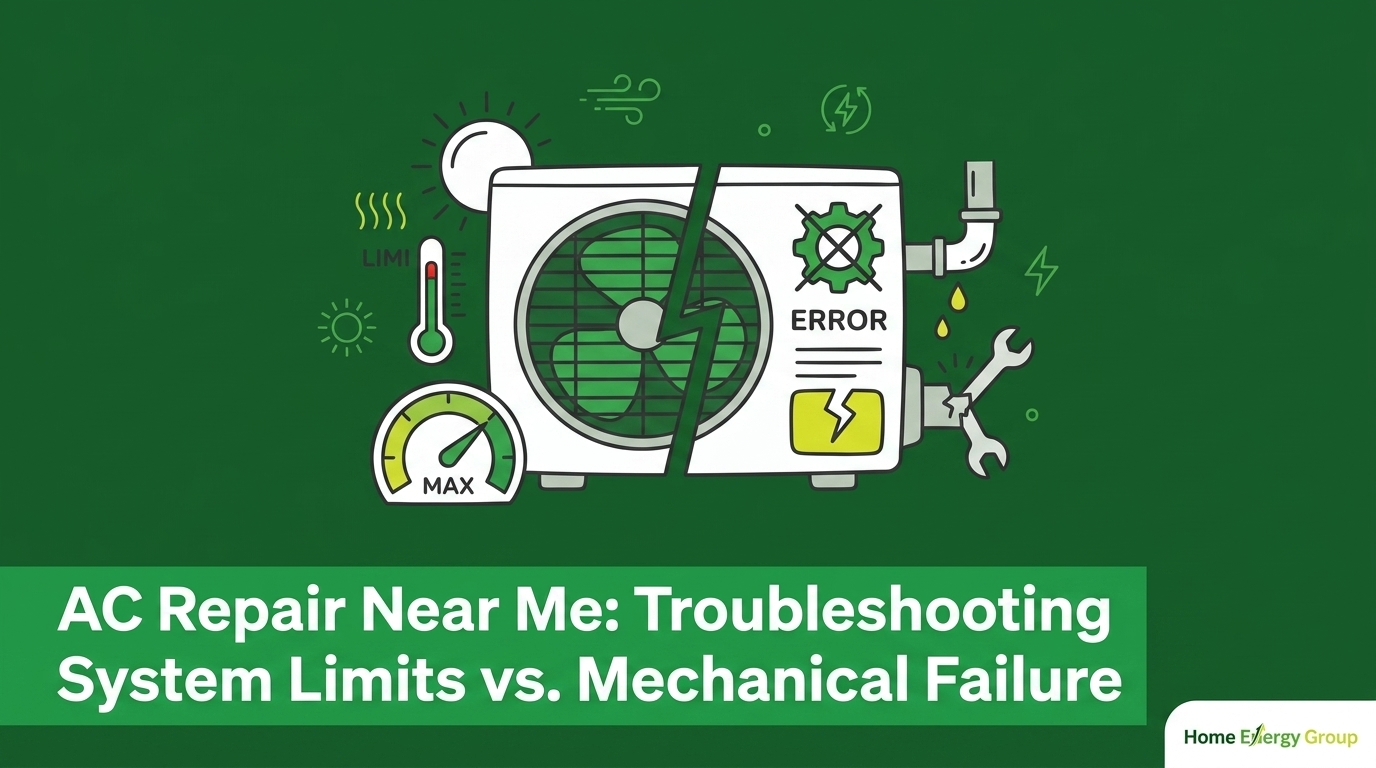
AC Repair Near Me: Troubleshooting System Limits vs. Mechanical Failure
When the AC Won't Stop Running: Diagnosing the Problem
Your air conditioner is running nonstop, but the house still feels uncomfortably warm. When faced with this frustrating scenario, turning to local service expertise and area tips is the best way to determine if you are dealing with a true emergency or just a system struggling against the weather. At Home Energy Group, we see this exact situation constantly. During intense July peak summer heatwaves in the Pacific Northwest, it is incredibly common for cooling systems to operate continuously without ever quite reaching that crisp 68 degrees on the thermostat. The immediate discomfort is real, and the heat can make it difficult to sleep or relax in your own home.
The core decision point you face as a homeowner is whether that continuous running points to an outright system failure or a perfectly normal mechanical response to extreme outdoor temperatures. When the thermometer climbs well past normal averages, your air conditioner is forced to work overtime simply to keep the indoor temperature from rising further. As local HVAC experts, we know that not every struggling system requires immediate emergency repair, but knowing the difference between a system that is maxed out and one that is broken is vital for your comfort and your equipment's longevity.
If you suspect an actual mechanical failure after evaluating your system's performance, reaching out for professional HVAC services and scheduling targeted air conditioning repair is the ultimate solution to restore your home's comfort.
The Pacific Northwest Thermal Envelope: Why Older Homes Struggle
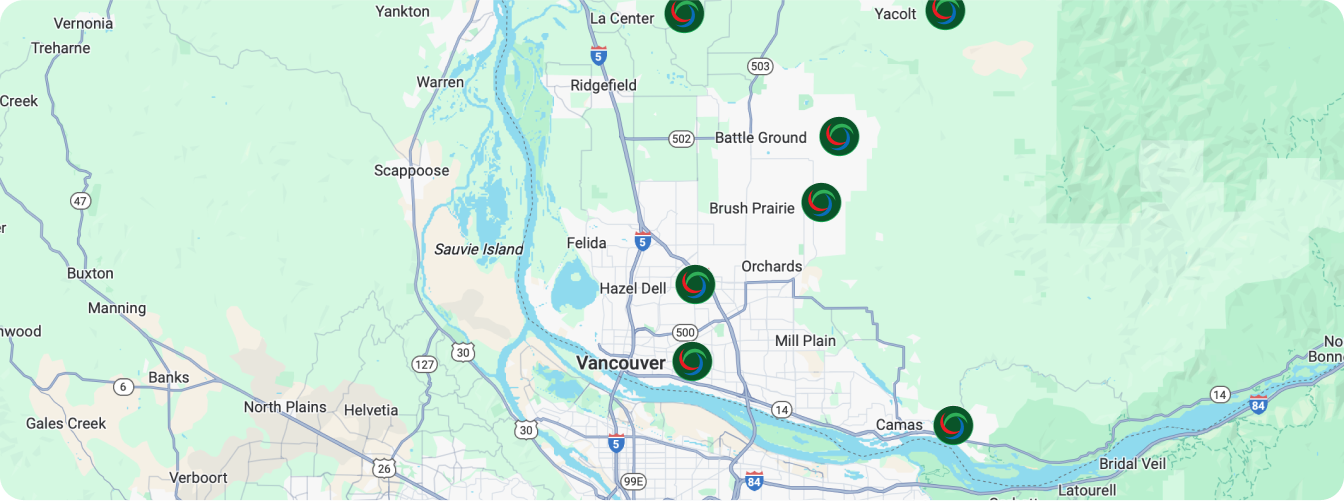
To understand why your air conditioner might run continuously without cooling the house, you first have to look at the building itself. In our years of servicing homes in Brush Prairie and surrounding Clark County, we've noticed that many were built decades ago when the local climate featured historically milder summers. Because extreme heat was rare, these homes were constructed with thermal envelopes that lack the heavy insulation, advanced weatherstripping, and double-pane windows required to block out modern heat extremes.
A home's thermal envelope is the physical barrier between the conditioned indoor air and the unconditioned outdoor air. It dictates exactly how much heat enters your living space through the roof, walls, and windows. When sudden heat spikes exceed the historical design parameters of many Brush Prairie and Clark County homes, a massive amount of solar radiation penetrates the living space. Even a perfectly functioning air conditioner can lose the battle against rapid heat gain if the home's thermal envelope allows hot air to pour in faster than the cooling system can remove it.
For example, when our technicians evaluate older architecture—such as a local home built in 1932 that originally lacked modern heating and cooling amenities—we find that the structure's thermal envelope simply cannot handle extreme summer weather on its own. In these cases, upgrading to a customized solution, like a Daikin VRV ducted system with two distinct zones, dramatically improves energy efficiency and provides reliable cooling even during severe weather extremes. Upgrading cooling systems in older homes often requires these customized, zoned approaches rather than just dropping in a larger central unit.
Historical Design Temperatures vs. Modern Reality
When our HVAC professionals at Home Energy Group install a new system, we perform a load calculation based on "design temperatures." A design temperature is a historical baseline that represents the typical peak heat a specific region experiences during the summer. Systems are deliberately sized to handle that specific temperature efficiently.
What happens when outdoor temperatures exceed this historical baseline? The system simply maxes out. If a home's cooling system was sized for a 90-degree design temperature, and a July heatwave pushes the outdoor thermometer to 105 degrees, the air conditioner will run continuously just to prevent the indoor temperature from climbing. It is not broken; it is simply operating outside the mathematical parameters it was built for.
HVAC Design Limits vs. Mechanical Failure: What Continuous Operation Means
One of the most common misconceptions our team hears from homeowners is that an air conditioner running all day is inherently broken or wasting energy unnecessarily. The reality is that an AC running continuously during a massive heatwave is often operating exactly as designed to remove maximum heat from the home. Air conditioners do not just cool the air; they also remove humidity. If our installation team were to put in an oversized unit just to handle the few extreme heat days of the year, that unit would "short-cycle"—turning on and off rapidly—during normal, milder weather. Short-cycling prevents the system from running long enough to pull humidity out of the air, leaving your home feeling cold but uncomfortably clammy.
Because systems are intentionally sized based on local averages to ensure proper dehumidification, they are designed to run constantly during peak extremes. During July peak summer heatwaves, you have to understand the difference between maintaining a temperature and actively dropping the temperature. In the middle of a 100-degree afternoon, your air conditioner may not be able to drop the indoor temperature from 75 degrees down to 68 degrees. However, if it is successfully holding the indoor temperature at 75 degrees while the sun beats down on the roof, it is doing its job perfectly.
The easiest way to check if your system is functioning at its design limit rather than failing is to hold your hand near a supply vent. If the air coming from the vents is blowing strong and feels cold, the system is likely functioning correctly. It is simply fighting an uphill battle against the sun and the outdoor heat. If the air is warm or the airflow is weak, then you are crossing the line from design limits into mechanical failure.

Basic Troubleshooting: Steps to Take Before Searching for Repairs
Before you assume the worst and call our dispatch team for an emergency repair, there are several safe, basic checks you can perform without a professional license. Our technicians frequently find that a system appearing to fail is actually just suffering from restricted airflow or a simple thermostat error. Taking a few minutes to troubleshoot can save you time and restore your comfort faster.
1. Check and replace dirty air filters: This is the single most common cause of weak cooling. A clogged filter restricts the amount of air flowing over the indoor evaporator coil. According to the Department of Energy, replacing a dirty, clogged filter with a clean one can lower your air conditioner's energy consumption by 5% to 15%. Even if you have recently upgraded your equipment—such as purchasing a high-efficiency ductless heat pump system back in the summer of 2018—routine maintenance remains essential. Systems known for excellent value and fast installation still rely on clean filters to function properly during a heatwave.
2. Verify your thermostat settings: It sounds overly simple, but double-check that the thermostat is actually set to "Cool." Additionally, ensure the fan setting is on "Auto" rather than "On." When the fan is set to "On," it blows air 24/7, even when the compressor outside is not actively cooling the air. This can make it feel like the system is blowing warm air.
3. Inspect the outdoor condenser unit: Walk outside and look at the large metal cabinet sitting in your yard. The condenser needs plenty of open space to exhaust the heat it pulls from your home. Ensure it is completely free of debris, tall grass, overgrown bushes, and airflow obstructions. There should be at least two feet of clearance on all sides.
4. Ensure all indoor vents and returns are open: Closing vents in unused rooms does not save energy; it actually disrupts the pressure balance of the entire system. Ensure all supply vents are fully open and that large pieces of furniture or rugs are not blocking the return air grilles.
If you find yourself constantly dealing with dirty filters and minor airflow issues, enrolling in a preventative maintenance plan is a smart way to keep your equipment running at peak performance before the intense heat of summer arrives in Brush Prairie and surrounding Clark County.
Clear Signs Your Air Conditioner is Actually Broken
If you have completed the basic troubleshooting steps and your home is still sweltering, you may be dealing with a genuine equipment breakdown. While continuous operation during July peak summer heatwaves is normal, our repair specialists look for certain symptoms that point directly to mechanical failure requiring professional intervention.
Warm or room-temperature air: If the air blowing from your supply vents feels warm or completely unconditioned, the system is no longer cooling. This often points to a refrigerant leak, a failing compressor, or an electrical issue preventing the outdoor unit from engaging.
Ice buildup on the system: Take a look at the indoor evaporator coils (if accessible) and the copper refrigerant lines running to the outdoor unit. If you see ice or thick frost forming on these components in the middle of summer, your system is failing. Ice forms when restricted airflow or low refrigerant causes the coil temperature to drop below freezing, turning the condensation in the air into solid ice.
Unusual and loud noises: Air conditioners make a steady humming sound. If you hear grinding, squealing, metal-on-metal screeching, or loud banging, shut the system down immediately. Grinding often indicates failing motor bearings, while screeching can point to a dying fan belt or compressor issue.
Frequent short-cycling: Unlike a system that runs continuously to fight the heat, a system that turns on for two minutes, shuts off, and immediately turns back on is short-cycling. This rapid cycling places massive strain on the electrical components and prevents the home from cooling properly.
When to Turn the System Off
If you notice ice buildup or the system is blowing completely warm air, the worst thing you can do is leave it running. Running a frozen or severely malfunctioning system forces the compressor to work under immense strain, which can cause this expensive component to burn out entirely. Turn the thermostat off and call a professional. Depending on the age of your equipment and the severity of the breakdown, a technician can help you determine if it makes sense to repair the unit or if you need to replace just the AC condenser to restore full functionality.
Upgrading Your Cooling Strategy for Extreme Heat
In our experience serving Brush Prairie and surrounding Clark County, basic central air conditioning is sometimes no longer sufficient to handle modern temperature extremes. If your older system is constantly breaking down or completely failing to keep the house livable during heatwaves, it may be time to rethink your home's cooling strategy entirely.
Modern high-efficiency systems handle extreme heat significantly better than older units. Variable-speed compressors, for example, can adjust their cooling output in tiny increments, running at lower speeds during mild weather for humidity control and ramping up to full capacity when a massive heat spike hits. This technology improves energy efficiency under heavy load and provides a much more consistent indoor temperature.
If your home's thermal envelope makes central cooling difficult, introducing alternative or supplemental cooling methods is highly effective. Ductless mini-split systems allow you to target specific rooms—like a master bedroom or a sun-facing living room—without relying on the home's existing ductwork. These systems can be installed exactly where you need the most relief.
Upgrading to modern technology not only improves your daily comfort but can also be a smart financial decision in the long run. Highly efficient equipment lowers your monthly energy consumption. Furthermore, generic federal tax credits or local utility incentives may apply to qualifying high-efficiency installations. Because these programs change frequently, we always advise readers to verify current programs and eligibility requirements with their utility provider or a tax professional when considering heat pump cooling solutions.
Rapid Response for True Cooling Emergencies
When troubleshooting fails and the indoor temperature continues to rise, fast professional help is necessary to restore your comfort and protect your home. During a professional diagnostic visit, a trained technician will assess the entire system—checking electrical connections, measuring refrigerant pressures, testing motor amp draws, and inspecting the ductwork—to pinpoint the exact cause of the failure.
During July peak summer heatwaves, our team at Home Energy Group experiences our highest call volumes of the year. This is why choosing a local team that understands the area's specific housing and climate challenges is so important. A community-based provider will prioritize rapid dispatch and clear communication during high-demand periods, ensuring you are not left waiting in the heat without answers.
This level of responsiveness is especially critical for property managers and landlords. When HVAC system issues arise in rental homes causing sudden discomfort, immediate action is required. A reliable local provider will immediately contact tenants, troubleshoot basic issues over the phone, and dispatch technicians—sometimes within an hour—so that tenant issues are resolved quickly, preventing the property from becoming sweltering during a heatwave. Knowing you have a dedicated local team ready to respond brings immense peace of mind when the weather turns extreme.
Frequently Asked Questions About AC Performance in the Heat
Why is my AC running constantly but not cooling?
Your AC is likely running constantly without cooling because of restricted airflow, a dirty air filter, or a refrigerant leak. When the system cannot pull enough air over the indoor coils, or lacks the refrigerant to absorb heat, it runs continuously without actually lowering the indoor temperature. Start by checking your air filter and ensuring all vents are open. If the filter is clean and the air is still warm, you need a professional to check the refrigerant levels.
How long should an AC run in hot weather?
During mild summer days, a properly sized air conditioner should run in cycles of 15 to 20 minutes before turning off. However, during extreme hot weather or a heatwave, it is completely normal for the system to run continuously for hours at a time. As long as the air coming from the vents is cold and the indoor temperature is holding steady, the long run cycles are a normal response to the high outdoor heat load.
Is it bad if my AC runs all day?
It is not inherently bad for your AC to run all day during a severe heatwave; in fact, it is designed to do so to manage indoor humidity and fight extreme heat gain. Modern systems are built for continuous operation under heavy loads. However, if the system runs all day during mild weather, or if it runs all day but blows warm air, that indicates a mechanical issue or severe inefficiency that needs to be addressed.
When should I call an AC repairman?
You should call a repair professional immediately if your system is blowing warm air, if you see ice forming on the indoor or outdoor coils, or if the unit is making loud grinding or screeching noises. Additionally, if you have changed your air filter and checked your thermostat settings but the system still cannot maintain a comfortable temperature, it is time to have a technician diagnose the problem.
Is my AC broken or just working hard in the heat?
The easiest way to tell the difference is to check the temperature of the air coming out of your supply vents. If the air is blowing strong and feels distinctly cold, your system is just working hard to fight the extreme outdoor heat. If the airflow is weak, room temperature, or warm, the system is actively failing and requires professional repair.
How do Pacific Northwest thermal envelopes affect my air conditioner's performance?
Many older homes in Brush Prairie and surrounding Clark County feature thermal envelopes built for historically milder summers, meaning they lack heavy insulation and modern windows. This allows a massive amount of outdoor heat to penetrate the home during a sudden heat spike. Consequently, your air conditioner has to work significantly harder and run much longer to remove that rapid heat gain, even if the equipment itself is functioning perfectly.
Restore Your Home's Comfort with Local Experts
Understanding your system's limits brings a great deal of comfort when the July peak summer heatwaves hit. Knowing the difference between an air conditioner that is simply working hard against a hot thermal envelope and one that is suffering from mechanical failure helps you make informed decisions about your home. If you have checked your filters, verified your thermostat, and still suspect true mechanical failure, do not let your family suffer in the heat. Reach out to our dedicated team at Home Energy Group for a comprehensive inspection or repair, and let us restore your home's cooling efficiency quickly and safely.