The Benefits of Scheduling Air Conditioning Installation in the Fall Off-Season
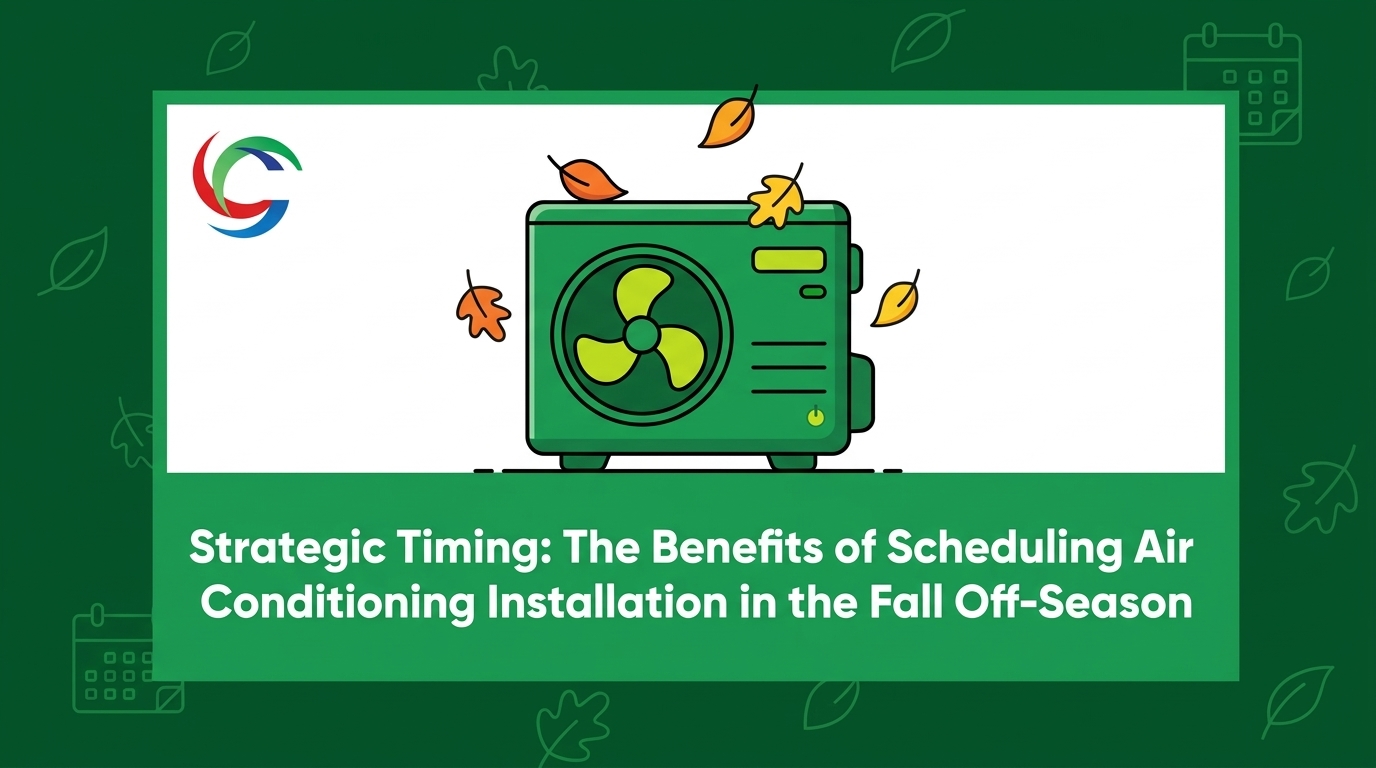
Surviving the Summer: Why Fall is the Time to Reassess Your AC
Your cooling system has been running nonstop for months, and while it barely managed to keep the house comfortable, you are likely exploring the benefits of scheduling air conditioning installation in the fall off-season instead of waiting until next spring. At Home Energy Group, our technicians have spent the summer responding to frantic cooling calls across Brush Prairie, and we know firsthand how stressful an aging system can be. The relief of making it through the summer heat with an underperforming cooling system is entirely understandable. You survived the hottest days, and it is tempting to just turn the thermostat off and forget about the equipment until next year. However, that relief often turns into a false sense of security for many homeowners.
You face a central dilemma right now: cross your fingers and hope the unit survives another full year, or take proactive steps to replace it on your own terms. Waiting until the first heatwave of next year frequently leads to rushed, stressful decisions, compromised equipment choices, and severely limited contractor availability. By acting now, you take control of the timeline and the financial planning process. If you are ready to explore your options, we encourage you to review our air conditioning installation services.
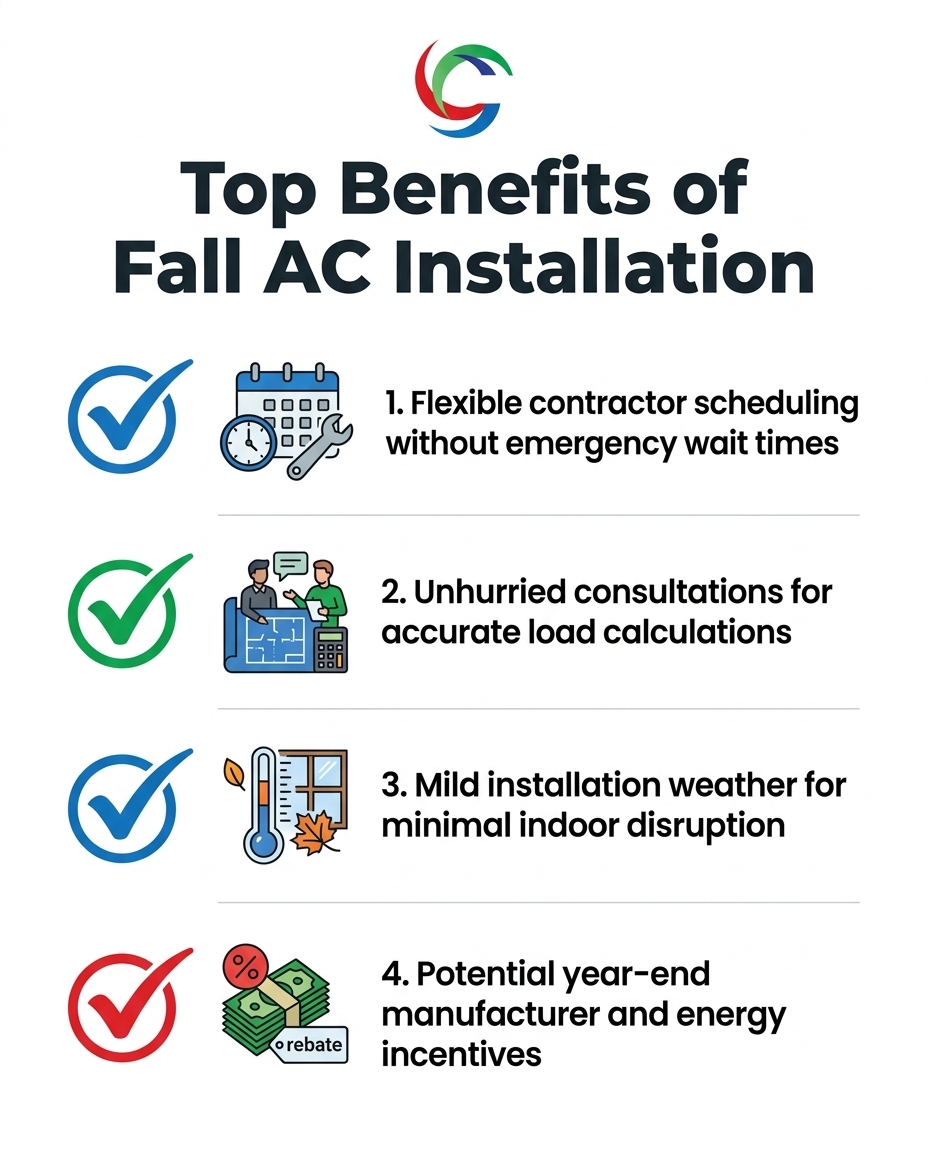
Our team sees this pattern frequently during the September shoulder season in the Pacific Northwest. Homeowners who act during this transitional period unlock several distinct advantages that disappear once the extreme weather returns. Here is a quick summary of why the off-season is the optimal time for a system upgrade:
• Flexible scheduling: Book installation dates that fit your family's busy calendar without battling emergency wait times.
• Unhurried consultations: Take the time to properly size and select the exact equipment your home needs.
• Mild installation weather: Keep your home's interior comfortable while the HVAC system is temporarily taken offline.
• Potential year-end incentives: Take advantage of manufacturer promotions and generic energy credits before the year closes.
The Climate Advantage of the Autumn Shoulder Season
The weather outside plays a surprisingly large role in the quality and comfort of an indoor equipment upgrade. In our years of serving Clark County, we've found that early autumn provides a brief, dry window before the heavy winter rains begin, making outdoor equipment replacement significantly smoother for our technicians. Replacing an air conditioner or heat pump requires several hours of outdoor work, including recovering old refrigerant, removing the heavy condenser unit, laying new electrical lines, and brazing copper connections. Doing this work in mild, dry conditions allows our installation crews to work efficiently and meticulously.
Why Outdoor Conditions Matter for Your Indoor Comfort
Beyond the technical advantages, mild outdoor temperatures mean your home's interior will not become uncomfortably hot or freezing cold while the HVAC system is temporarily offline. When you schedule a replacement during a July heatwave, your house can quickly heat up to unbearable temperatures while the old unit is disconnected. Conversely, a January freeze makes the house dangerously cold during a furnace or heat pump swap.
Homeowners in Brush Prairie and Clark County benefit from a distinct, crisp shoulder season. During these weeks, you can simply open a few windows to keep the house perfectly comfortable while our Home Energy Group crew completes their work. This eliminates the physical discomfort and stress that typically accompanies emergency HVAC replacements during extreme weather events. The mild weather effectively removes the pressure, allowing both you and our installation team to focus on getting the job done perfectly rather than just getting the air flowing as fast as possible.
Unhurried Consultations and Proper System Sizing
Properly sizing HVAC equipment is a detailed scientific process that requires time for accurate load calculations, which is easily accommodated during the off-season. A central commitment of the Home Energy Group team is prioritizing homeowner education over rushed, high-pressure sales. We believe that an informed homeowner makes the best long-term decisions for their property. During the chaotic summer months, the industry standard often defaults to an "emergency swap-out" mentality—simply replacing a broken three-ton unit with a new three-ton unit because time is short and the house is sweltering.
The autumn off-season completely changes this dynamic. Extra time allows our comfort advisors to perform a comprehensive Manual J load calculation, which accounts for your home's square footage, insulation levels, window quality, and sun exposure. This careful, educational approach ensures you do not end up with an oversized unit that short-cycles or an undersized unit that runs constantly. Taking this time is especially valuable during the September shoulder season in the Pacific Northwest, where varying microclimates demand tailored solutions.
Exploring Modern High-Efficiency Options
With the pressure of an emergency removed, you have the luxury of exploring all modern equipment options. For example, one of our local customers in an older 1932 home with no modern amenities needed a solution to handle both hot summers and cold winters. By taking the time to consult properly with our team during the off-season, they chose to install a highly efficient VRV system with ducted air handlers and a two-zone setup, completely transforming their home's energy profile. If you are interested in versatile, year-round comfort solutions, this is the perfect time to discuss heat pump installation.
• Analyze your true needs: Discuss hot or cold spots in the house that a new system could resolve with our technicians.
• Compare efficiency ratings: Take the time to understand SEER2 and HSPF2 ratings and how they impact long-term energy usage.
• Review multiple quotes: Sit down and compare different system tiers without a technician rushing to their next emergency call.
Maximizing End-of-Year Incentives and Rebates
The fourth quarter of the year is historically a strategic time to invest in major home improvements due to a variety of financial incentives. Manufacturers frequently introduce end-of-year promotions to clear out current inventory before the new calendar year begins and new models are introduced. By scheduling your installation in the fall, you position yourself perfectly to take advantage of these overlapping generic financial incentives, tax credits, and manufacturer programs.
Generic federal tax credits and local utility incentives may also apply to qualifying high-efficiency installations. Our team regularly finds that many homeowners across Brush Prairie and Clark County are unaware that these programs often operate on an annual calendar. Completing your installation before the current tax year closes allows you to claim potential credits on your upcoming tax return sooner, rather than waiting an additional twelve months.
• Manufacturer Promotions — Typical Source: Equipment Brands — Strategic Benefit of Fall Installation: Often released in Q4 to clear inventory before the new year.
• Federal Energy Credits — Typical Source: Government Programs — Strategic Benefit of Fall Installation: Installing before December 31st allows you to claim credits on the current year's taxes.
• Utility Rebates — Typical Source: Local Energy Providers — Strategic Benefit of Fall Installation: Funds for local energy efficiency programs are often still available before the annual budget resets.
We highly advise readers to verify all current programs with a qualified tax professional or their local utility provider, as program availability and qualification requirements change frequently. However, having the time to research and apply for these programs is a massive advantage. If you want to see what current offers might apply to your project, you can review available manufacturer rebates and promotions.
Flexible Scheduling Before the Winter Heating Rush
The HVAC industry operates on a predictable cycle of extreme peaks and deep valleys. Our dispatchers at Home Energy Group notice a distinct operational lull during the fall season that occurs right between the chaotic summer cooling emergencies and the inevitable winter furnace breakdowns. This seasonal flexibility heavily favors the homeowner, allowing us to easily accommodate your preferred installation dates and times.
A more relaxed schedule naturally translates to a smoother installation process. When our technicians are not rushing to handle a backlog of twenty emergency no-cool calls, they have ample time for thorough system testing, precise airflow balancing, and meticulous workspace cleanup. They can spend an extra hour walking you through the new thermostat controls and answering every question you have about filter changes and maintenance routines.
Avoiding the Stress of Emergency Breakdowns
To understand the value of flexible scheduling, consider the alternative. One of our local customers found themselves with absolutely no heat source in the dead of winter due to a non-functional radiant ceiling system, right as her husband was returning home after major surgery. We immediately scheduled an emergency appointment and installed a high-efficiency heat pump so they had reliable heat before he arrived from the hospital. While our dedicated team will always step up for a winter emergency, booking during the September shoulder season in the Pacific Northwest avoids this kind of intense, high-stakes stress entirely. Whether you need a standard replacement or are looking for reliable ac installation ridgefield wa services, the off-season guarantees you get the best dates on our calendar.
Taking the Time to Explore Financial Planning
Upgrading a central air conditioning system is a significant investment in your property's value and your family's daily comfort. We've sat at the kitchen tables of countless Clark County families who felt forced into immediate, unplanned financial strain when an aging system failed in the middle of a July heatwave. You are forced to make a major purchasing decision in a matter of hours, simply to get the house cooled down.
Proactive fall planning fundamentally changes this dynamic. It allows you ample time to review different payment structures, compare long-term energy savings against upfront costs, and structure the investment in a way that makes sense for your household budget. Treating the upgrade as a planned, strategic investment rather than a reactive emergency always yields better long-term satisfaction.
Homeowners throughout Brush Prairie and Clark County who plan ahead report feeling much more confident in their purchasing decisions. They have the breathing room to weigh the benefits of a standard efficiency unit against a variable-speed system that offers superior humidity control. If you want to explore how to structure your upcoming project, we offer several flexible financing options to help you make the best choice for your home.
Avoiding the Domino Effect of an Overworked System
Even if your aging air conditioner technically survived the summer, it likely sustained severe mechanical strain after running constantly during peak heat. Older systems that struggle to keep up often experience degraded capacitors, stressed compressor motors, and worn contactors. In our experience, this unseen wear and tear creates a dangerous domino effect if left unaddressed.
Letting a failing system sit dormant over the winter is a risky gamble. Components that were heavily stressed in August can easily seize up after sitting unused for six months. Minor refrigerant leaks that developed during heavy summer use will continue to slowly drain the system over the winter, guaranteeing the unit will freeze up or fail entirely the first time you turn it on next spring. If you are curious about the specific mechanical toll this takes, you can read more about what happens if your AC runs all day.
Symptoms of a Strained Cooling System
When our Home Energy Group technicians perform fall tune-ups, we frequently inspect systems during the September shoulder season in the Pacific Northwest that exhibit clear signs of impending failure. Watch for these lingering symptoms from the summer:
• Unusual noises: Grinding, squealing, or rattling sounds that have grown louder over the past few months.
• Extended run times: The system runs for hours on end without ever fully reaching the target temperature on the thermostat.
• Inconsistent cooling: Certain rooms in the house remain stubbornly warm while others are freezing cold.
• Elevated energy bills: A noticeable spike in your utility costs compared to the exact same month last year.
Beyond the mechanical risks, an inefficient, overworked system significantly impacts your overall home comfort and indoor air quality. Struggling units fail to properly dehumidify the air, leaving your home feeling sticky and stagnant.
Securing Your Home's Comfort for the Year Ahead
The logical, tangible reasons for a fall installation are clear: you gain access to highly flexible scheduling, you receive a better, unhurried education on your equipment options from our comfort advisors, and you position yourself to take advantage of potential year-end generic incentives. By treating your HVAC upgrade as a proactive home improvement project rather than a reactive emergency, you maintain complete control over the process.
Our goal at Home Energy Group is to provide immense peace of mind, knowing that your home is prepared for whatever the weather brings next year. Entering the next cooling season with a reliable, high-efficiency system already properly installed and tested removes a major source of homeowner anxiety. For residents in Brush Prairie and Clark County, we encourage you to use this mild weather to explore your options stress-free. To get started on securing your home's comfort, browse our comprehensive HVAC services today.
Frequently Asked Questions
When is the best time of year to replace an air conditioner?
At Home Energy Group, we always recommend the brief shoulder seasons in early fall and late spring as the best times to replace an air conditioner. During these periods, our contractors experience a lull in emergency calls, allowing for highly flexible scheduling. The mild weather also ensures your home remains comfortable while the system is temporarily offline during the installation process. Finally, fall installations can often align with year-end manufacturer promotions.
Why should I replace my AC before it completely breaks?
Replacing your AC proactively allows you to make a carefully researched decision rather than a rushed, stressful one during a heatwave. When a system breaks down completely in mid-summer, you are often forced to choose whatever equipment is currently in stock and accept longer wait times for installation. Proactive replacement also prevents you from sinking money into expensive band-aid repairs on a dying unit.
What are the benefits of off-season HVAC installation?
Off-season installation guarantees you our team's undivided attention and the pick of our schedule. Because our technicians are not rushing to handle a massive backlog of emergency calls, they have ample time to perform detailed load calculations and meticulously test the new system. Additionally, you may have the opportunity to claim generic year-end tax credits or utility incentives before the calendar year closes.
Is it better to replace an AC in the fall or spring?
Both seasons offer excellent logistical advantages, but fall often provides unique financial benefits. Manufacturers frequently release promotions in the fourth quarter to clear out inventory before new models arrive the following year. Furthermore, completing the installation in the fall ensures you can claim any applicable federal energy tax credits on your upcoming tax return, rather than waiting a full year.
How long does an air conditioning installation typically take in the fall?
A standard residential air conditioning installation usually takes our crew a single full day to complete. Because the fall weather in Clark County is typically mild and dry, our technicians face fewer weather-related delays, allowing the process to proceed smoothly and efficiently. Complex installations, such as those requiring new ductwork or comprehensive zoning systems, may take an additional day.
Do I need to replace my furnace at the same time as my AC?
While it is not strictly mandatory, our technicians highly recommend replacing both systems simultaneously if your furnace is over ten years old. The indoor evaporator coil of your AC sits directly on top of the furnace, meaning they share the same blower motor and ductwork to distribute air. Replacing them together ensures maximum energy efficiency, guarantees the components communicate perfectly, and saves you money on overlapping labor costs.