Navigating AC Installation Timelines When Closing Early on a Ridgefield Home

The Challenge of Navigating AC Installation Timelines When Closing Early on a Ridgefield Home
Navigating AC installation timelines when closing early on a Ridgefield home can feel like a logistical puzzle, especially if you discover the property lacks adequate cooling just as the July peak summer heat arrives. The stress of buying a house is significant on its own, but realizing that your new sanctuary might be uncomfortably hot upon move-in adds an entirely new layer of urgency. Real estate transactions are notoriously unpredictable. Closing dates are frequently moving targets, heavily influenced by last-minute financing adjustments, appraisal delays, or unexpected title requirements. This volatility creates a distinct challenge: how do you sequence quotes, order equipment, and schedule a major installation before you officially own the property?
If you are managing a tight escrow schedule and need reliable HVAC Services, our team can help you sequence the project seamlessly.
The core decision point for homebuyers in this situation revolves around timing and access. Standard contractor schedules require firm dates, but escrow periods rarely offer that luxury. Taking a proactive approach is the only way to ensure the house is comfortable immediately upon move-in. By understanding the intersection of real estate logistics and HVAC dispatching, you can strategically bridge the gap between signing your closing documents and enjoying a perfectly cooled home. The goal is to eliminate the typical weeks-long waiting period that plagues buyers who wait until they have the keys in hand to make their first phone call.
Why Escrow Timelines Complicate Summer Cooling Plans
Understanding the friction between standard contractor operations and real estate transactions is the first step toward a successful installation. Standard escrow periods typically run anywhere from 30 to 45 days. However, as any experienced homebuyer knows, the final closing date frequently shifts at the last minute. A delayed wire transfer, a final walkthrough contingency, or a backlog at the county recording office can push a Friday closing to the following Tuesday without warning.
This unpredictability directly clashes with how most service businesses operate. HVAC contractors rely on tightly managed dispatch boards to maximize efficiency, especially during the busy season. Here is why this dynamic creates a bottleneck for homebuyers:
1. Firm scheduling requirements: Most contractors require a guaranteed date to book an installation team for a full day. If you cannot guarantee you will own the home on that specific Tuesday, the contractor cannot risk blocking out their schedule.
2. The peak season penalty: Waiting until the keys are in hand to start the process often means waiting weeks in a hot house for an available appointment. When temperatures rise, dispatch boards fill up rapidly.
3. Access limitations: Before closing, you do not have the legal right to grant a contractor unrestricted access to the property for multiple days of labor.
Early communication with a contractor who understands local real estate nuances is critical to navigating this gap. Planning an AC installation requires strategic foresight. To illustrate the difference between standard and proactive planning, consider the typical timelines:
• Reactive (Waiting for Keys) — Action Taken During Escrow: None. Buyer waits until closing is finalized. — Result After Closing: Buyer calls for quotes on Day 1. Waits 1-2 weeks for estimates, orders equipment, waits another 1-2 weeks for installation in a hot house.
• Proactive (Escrow Coordination) — Action Taken During Escrow: Quotes secured during inspection. Equipment staged in advance. — Result After Closing: Installation begins on Day 2. Home is fully cooled before furniture is moved in.
How to Secure HVAC Quotes While Still in Escrow
You do not have to wait until you are the legal owner to begin gathering accurate estimates for your new cooling system. The key is to leverage the access windows already built into the standard real estate purchasing process. The home inspection period is the most valuable opportunity for this. While your hired home inspector is evaluating the roof, foundation, and plumbing, you can simultaneously grant an HVAC professional access to the property. This allows them to perform the necessary load calculations, assess the existing ductwork, and provide a precise quote based on the home's actual layout.
During this walkthrough, it is essential to discuss the full scope of work required. For example, a thorough evaluation will determine whether a full system replacement is necessary or if replacing just the AC condenser is a viable option based on the condition and compatibility of the indoor coil and furnace. Ensuring all estimates account for the specific layout and existing infrastructure of the home prevents surprise costs and delays later in the process.
Coordinating with Sellers and Agents
Gathering quotes before closing requires transparent communication with all parties involved. You must coordinate with your real estate agent to request permission from the seller for these visits. Most sellers are accommodating if the visits are consolidated.
• Utilize existing appointments: Schedule HVAC walkthroughs during the general home inspection, the appraisal visit, or the final walkthrough to minimize disruption to the current occupants.
• Maintain transparency: Ensure the listing agent understands that these visits are strictly for quoting future upgrades, not for requesting additional seller repairs or concessions, which helps keep the transaction amicable.
• Confirm property boundaries: Make sure the technician knows what areas they are permitted to access, especially if the seller is still living in the home and has restricted certain rooms.
Navigating Equipment Lead Times for Peak Season Installations
One of the most overlooked aspects of a major home cooling upgrade is the time it takes to procure the actual machinery. The concept of "equipment staging" is a highly effective strategy for homebuyers. Staging involves ordering the specific unit while you are still in escrow, allowing the contractor to receive and hold the equipment at their local facility. By the time your closing completes, the machinery is already sitting in town, ready to be loaded onto a truck.
The reality of supply chains: Specific models, particularly high-efficiency units or specialized heat pumps, often require several days or even weeks of lead time to arrive from regional distribution centers. If you wait until closing day to authorize the order, you are at the mercy of the current supply chain.
This is especially critical when dealing with regional weather patterns. July peak summer in the Pacific Northwest drives massive demand for cooling solutions. When a heat wave hits, local warehouses deplete their inventory rapidly. Pre-ordering equipment is absolutely essential to avoid sweltering in a newly purchased home. Proactive ordering prevents supply chain delays from impacting your move-in experience, ensuring that the only variable left to manage is the labor schedule.
The Value of Flexible Scheduling When Closing Dates Shift
Rigid contractor policies can severely penalize buyers when a closing is delayed by a lender or title company. If a contractor demands a non-refundable deposit to hold a specific date, and your escrow gets pushed back by three days due to a paperwork error, you might lose your spot on the schedule entirely. This forces you to start over at the back of the line, which is a disastrous outcome during peak cooling season.
A contractor experienced in local real estate transactions will offer tentative scheduling that adapts to escrow changes. Deep local real-estate timeline familiarity in Clark County is a significant asset; professionals who understand the rhythm of local title companies and county recording offices can build flexibility into their dispatch boards. They know that a "Friday closing" often means "Monday access," and they plan their labor accordingly.
A typical pattern we see locally involves homeowners purchasing a property that requires immediate climate control upgrades before move-in. For example, during a recent summer installation, a customer purchased a new ductless heat pump system for their new home. Because of excellent communication and flexible scheduling, the system was installed quickly without any issues, accommodating their shifting escrow timeline perfectly. This adaptability significantly reduces the stress of coordinating a move and a major home upgrade simultaneously. Flexible scheduling ensures that if a closing moves up or gets pushed back, your installation remains a priority.
Sequencing Your Move-In and System Installation Seamlessly
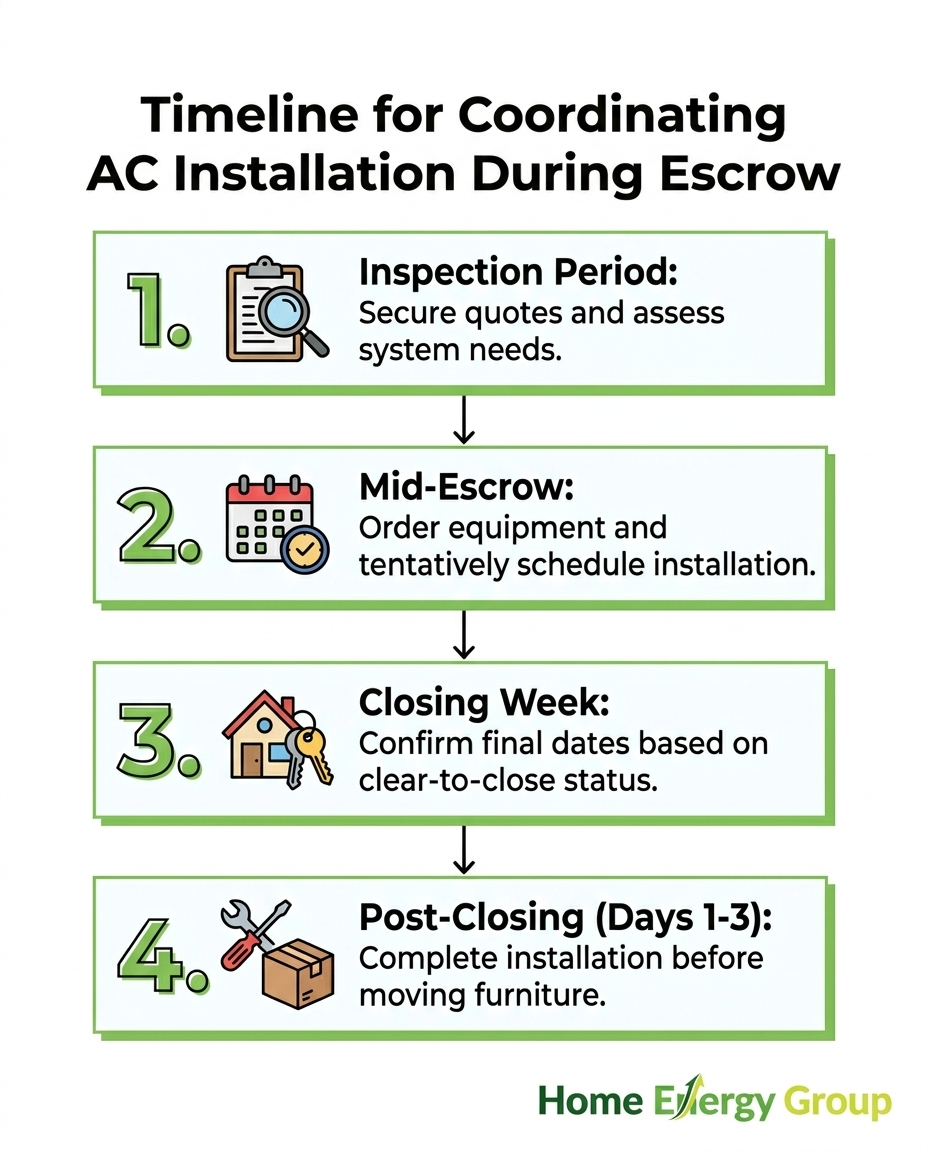
To achieve the best possible outcome, you need a precise timeline for the days immediately surrounding your closing. Coordinating the installation before you move your belongings into the house makes the process faster, cleaner, and less stressful for everyone involved. Here is the ideal sequence to follow:
1. Day 1 (Closing Day): Finalize your closing at the title company, receive the keys, and immediately contact your contractor to confirm the final installation date. Verify that the staged equipment is ready for transport.
2. Day 2 to Day 3 (Installation Window): Have the technicians complete the installation before you move in major furniture. An empty house allows technicians unobstructed access to hallways, utility closets, and outdoor spaces, significantly speeding up the labor process and minimizing the risk of damage to your belongings.
3. Day 4+ (Move-In): Move into a comfortably cooled home, fully prepared to handle the peak seasonal heat.
4. The Final Step: Ensure the final walkthrough with the installation team covers system operation, filter replacement locations, and thermostat programming so you know exactly how to manage your new indoor climate.
Protecting Your New Investment for the Long Term
A new cooling system is a significant investment, especially when stacked on top of a down payment, closing costs, and moving expenses. Transitioning from the immediate stress of installation to long-term financial planning is crucial for peace of mind. Exploring flexible payment options can ease the immediate financial burden of a major home purchase. Many homeowners utilize HVAC financing options to preserve their liquid cash for other immediate move-in expenses, allowing them to spread the cost of the new system over time.
Additionally, it is wise to investigate generally applicable energy rebates or tax credits for high-efficiency upgrades. Federal tax credits may apply to qualifying heat pump installations, and local utility programs often incentivize the transition to more efficient machinery. Always verify current programs with your utility provider or a tax professional to maximize your return on investment.
The Importance of Routine Care
Protecting your new equipment from day one requires professional upkeep. Once the system is installed and cooling your Ridgefield home, establishing a routine care schedule is the best way to ensure it operates efficiently through its entire lifespan.
• Warranty protection: Regular check-ups are often required by manufacturers to maintain the validity of your equipment warranty.
• Peak performance: Routine cleaning of coils and monitoring of refrigerant levels keep the system running at its designed efficiency, lowering your monthly energy consumption.
• Preventative action: Setting up an ongoing maintenance plan immediately after installation prevents minor wear and tear from developing into future breakdowns.
By planning ahead and working with flexible, knowledgeable professionals, navigating AC installation timelines when closing early on a Ridgefield home transforms from a stressful hurdle into a seamless start to life in your new property.
Frequently Asked Questions
Can I get an HVAC quote before closing on a house?
Yes, you can absolutely secure a quote before closing, provided you coordinate access with the seller. The most common and convenient time to do this is during your scheduled home inspection. Having an HVAC professional evaluate the property during this window allows them to perform accurate sizing calculations without requiring an additional appointment.
Can contractors do work during escrow?
Generally, contractors cannot perform permanent installations or alterations on a property until you are the legal owner. Doing work before closing introduces significant liability and insurance complications for both you and the current homeowner. However, contractors can perform measurements, provide quotes, and order equipment to be staged at their facility while you wait for the transaction to finalize.
How long does it take to order and install a new AC?
The timeline varies based on equipment availability and seasonal demand, but ordering standard equipment typically takes a few days, while high-efficiency models may take weeks. The physical installation usually takes one to two full days. By staging the equipment during escrow, the post-closing timeline is reduced strictly to the labor hours required for installation.
How do you coordinate home repairs before move-in?
The most efficient way to coordinate pre-move-in repairs is to secure all quotes and materials during the escrow period. Once the closing is finalized and you have the keys, schedule contractors to complete their work before you move your furniture into the home. An empty house allows technicians to work faster and prevents your belongings from being exposed to construction dust or accidental damage.
What happens if my closing date changes after I schedule an AC installation?
If you are working with a contractor experienced in real estate transactions, they will adjust your tentative installation date to align with your new closing timeline. It is crucial to communicate any delays from your lender or title company to your contractor immediately. Flexible scheduling ensures you do not lose your place in line or face penalty fees for circumstances beyond your control.
Should I order AC equipment before I officially own the home?
Ordering equipment while still in escrow is a highly recommended strategy, often referred to as equipment staging. This ensures the machinery is locally available the moment you take possession of the property. While there is a slight risk if the home purchase falls through entirely, most contractors can hold or reallocate standard equipment, making it a calculated step that prevents weeks of waiting in a hot house.