
Integrating a New Heat Pump with an Existing Gas Furnace for Dual-Fuel Efficiency
The Myth of the Complete Overhaul: Upgrading Your Fall Heating Strategy
You might think that upgrading to modern, high-efficiency electric heating means hauling your perfectly functional gas equipment to the scrapyard. That simply is not true. Integrating a new heat pump with an existing gas furnace for dual-fuel efficiency is actually one of the smartest strategies for handling the unpredictable weather patterns in our region. At Home Energy Group, we often hear homeowners assume that adopting new technology requires a complete, tear-out-and-replace overhaul, but pairing new electric systems with existing gas infrastructure offers the best of both worlds.
During the mild early fall to deep winter transition, the weather is notoriously fickle. You experience chilly mornings that demand heat, followed by warm afternoons where a full gas furnace cycle feels like massive overkill. Running a powerful gas furnace just to take the edge off a 55-degree morning wastes energy and often overheats the home. The concrete problem we see repeatedly in Brush Prairie is finding a way to heat your house efficiently during these mild swings without sacrificing the heavy-duty heating power you will desperately need when the deep freezes arrive. The decision point for many homeowners is whether to pair new technology with their current setup before the harsh winter weather sets in.
If you are exploring heating systems to prepare for the season, a dual-fuel approach deserves serious consideration. It allows you to leverage the extreme efficiency of electricity during the fall while keeping your gas equipment on standby for the winter.
Defining Dual-Fuel Heating System Integration
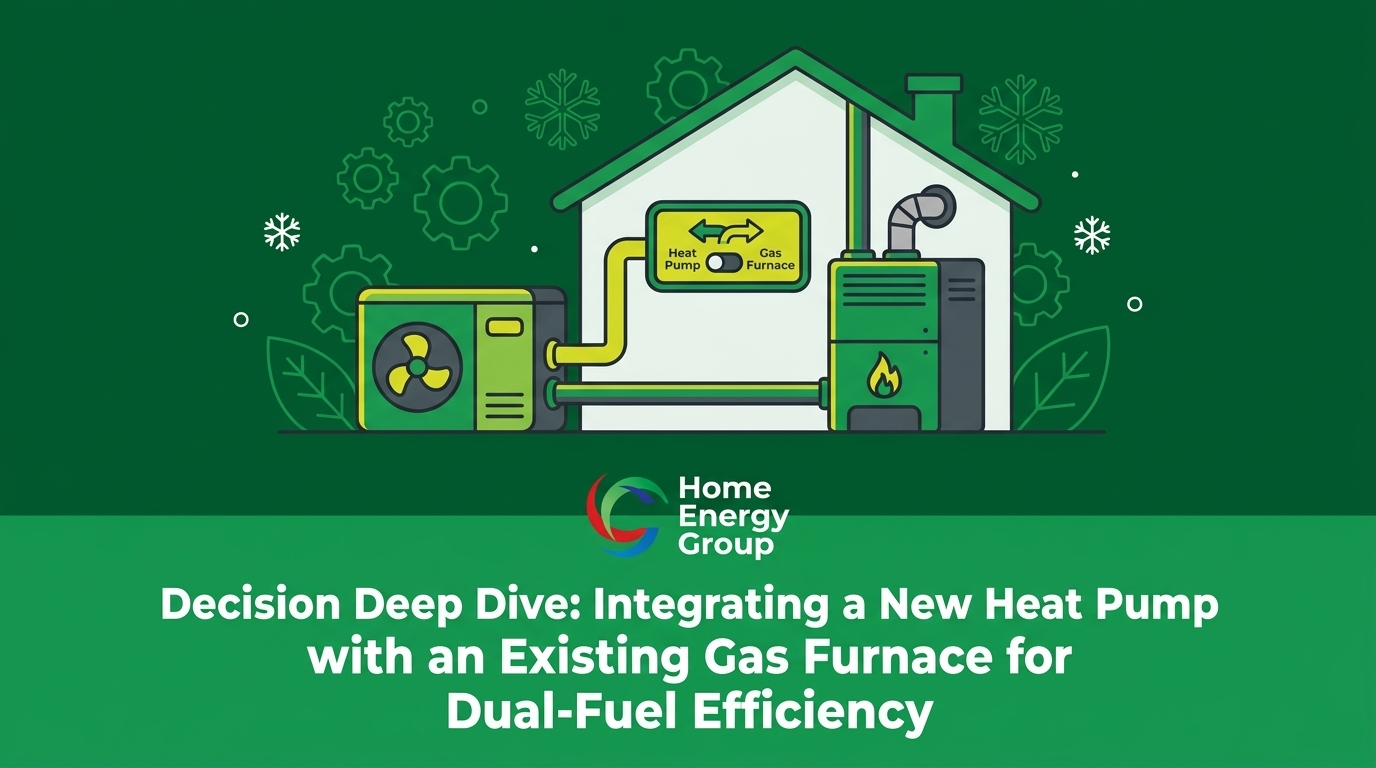
Dual-Fuel Heating System Integration is a hybrid HVAC setup that combines an electric air-source heat pump with a traditional gas furnace, allowing the two units to share the same ductwork and alternate operation based on outdoor temperatures to maximize energy efficiency. Rather than relying on a single fuel source year-round, this system dynamically chooses the most efficient method to heat your home at any given moment.
In this configuration, the electric heat pump acts as the primary workhorse for the majority of the year. It handles all of your cooling needs during the summer by extracting heat from inside your home and moving it outside. When the weather turns chilly, the heat pump reverses its operation. It extracts ambient heat energy from the outdoor air and moves it indoors. Because moving heat requires significantly less energy than generating it, the heat pump is incredibly efficient during mild weather.
However, as temperatures plummet toward freezing, there is less ambient heat available in the outside air. This is where the gas furnace steps in. The furnace acts as the secondary, powerhouse heat source, taking over completely when the weather becomes too cold for the heat pump to operate efficiently. Our team at Home Energy Group believes in educating homeowners on this system logic rather than just pushing new box replacements. In our experience, understanding how these systems collaborate helps you make informed decisions about your home comfort. If you are considering a heat pump installation, pairing it with your current furnace is a highly strategic move.
How Automatic Switchover Works
The transition between the electric heat pump and the gas furnace is entirely seamless and requires no manual intervention from the homeowner. You do not have to flip a switch or constantly monitor the weather forecast. When our installation team sets up your system, the entire operation is governed by a smart thermostat equipped with an outdoor temperature sensor.
The smart logic: The thermostat constantly monitors the outdoor conditions. When the temperature drops below a specific, pre-programmed threshold, the thermostat automatically shuts down the heat pump and ignites the gas furnace. Once the outdoor temperature rises back above that threshold, the system switches back to the highly efficient heat pump. This automatic logic ensures you are always using the most cost-effective fuel source for the current weather conditions.
The Science of the Switchover: Understanding the Balance Point
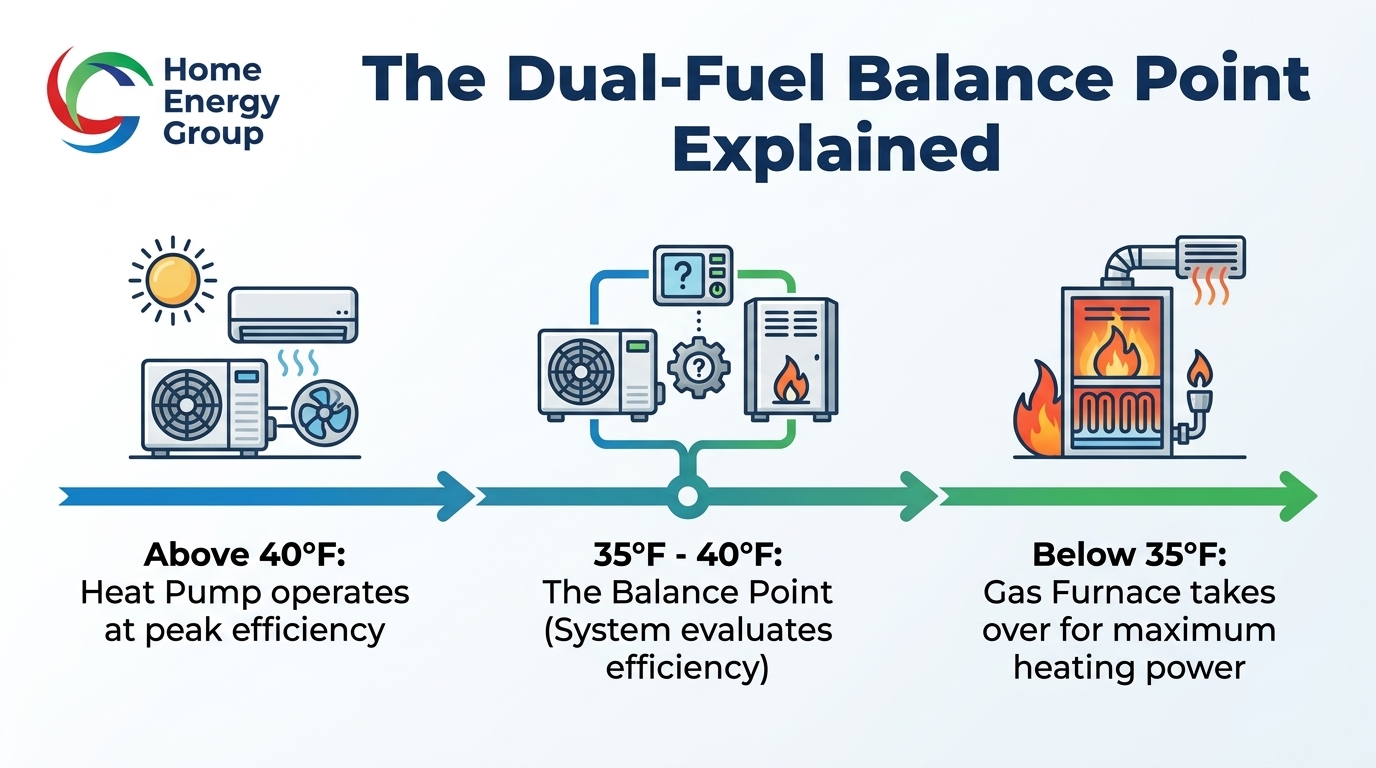
The specific temperature threshold where your system shifts from electric heat to gas heat is known as the "balance point." Based on our extensive experience calibrating systems in the Ridgefield and Brush Prairie area, our technicians typically set this balance point between 35 and 40 degrees Fahrenheit. Understanding the science behind this number reveals why dual-fuel systems are so remarkably efficient.
The physics of heat extraction: Air-source heat pumps do not burn fuel to create heat; they absorb existing heat energy from the outdoor air using compressed refrigerant. Even at 45 degrees, there is an abundance of heat energy in the air. However, as the temperature drops closer to freezing, the heat pump has to work harder and run longer to extract enough heat to keep your home comfortable. Below the balance point, the electricity required to run the compressor exceeds the energy it takes to simply burn natural gas.
A properly calibrated smart thermostat maximizes your energy savings automatically by pinpointing this exact crossover point. It prevents the heat pump from running constantly in freezing weather, which saves wear and tear on the compressor. It is important to note that every home is slightly different. Factors like your home's insulation levels, the quality of your windows, and the overall layout can slightly alter your specific balance point. A well-insulated home might retain heat better, allowing the heat pump to operate efficiently down to 32 degrees, while a drafty older home might require the gas furnace to kick on at 40 degrees.
Climate Match: Aligning Equipment with Pacific Northwest Weather Swings
The mild early fall to deep winter transition in the Pacific Northwest creates a unique heating challenge. Our region is characterized by damp, moderate autumns that eventually give way to harsh, biting winter ice storms. This specific climate profile is exactly why our experts advocate for a dual-fuel system as an exceptionally logical choice. By aligning the equipment's strengths with our specific weather patterns, you achieve unparalleled comfort and efficiency.
During the mild, damp days of September and October, a heat pump operates at absolute peak efficiency. Because the temperature rarely dips below 40 degrees during the day, the heat pump can deliver up to three times more heat energy to your home than the electrical energy it consumes. However, when those occasional deep freezes and ice storms hit in January, a heat pump alone can struggle to keep up. That is when the gas furnace proves its worth, providing rapid, high-capacity heat that easily overcomes the freezing outdoor temperatures.
• Mild September / October (45°F - 60°F) — Primary System Running: Electric Heat Pump — Efficiency Logic & Performance: Operates at peak efficiency. Extracts abundant ambient heat from the air, using minimal electricity.
• Chilly November Nights (35°F - 45°F) — Primary System Running: Electric Heat Pump — Efficiency Logic & Performance: Still highly efficient. The system may run slightly longer cycles but remains more cost-effective than burning gas.
• Deep Winter Ice Storms (Below 35°F) — Primary System Running: Gas Furnace — Efficiency Logic & Performance: Takes over entirely. Provides rapid, high-capacity combustion heat to overcome freezing temperatures quickly.
Maximizing Your Investment: Retaining Your Existing Gas Furnace
One of the most compelling reasons to choose a dual-fuel setup is the ability to protect your previous investments. If your current furnace is only five to ten years old, discarding it to install a fully electric system is often a waste of perfectly good equipment. By pairing a new heat pump with your existing gas furnace, you maximize the value of the machinery you already own.
Integrating a heat pump actually protects the lifespan of your existing furnace. Because the heat pump handles the heating load throughout the entire fall season, the furnace sits idle for months. By significantly reducing the furnace's workload, you reduce the wear and tear on its internal components, potentially adding years to its operational life. A phased upgrade approach is often the most cost-effective path to modern efficiency, allowing you to gain the benefits of a heat pump now without the expense of replacing the entire HVAC system.
Recently, a Brush Prairie homeowner reached out to the Home Energy Group team for a second time, needing a heat pump integrated with their existing furnace. By executing the installation carefully within the stated timeframe, we secured a setup where the quality of the equipment and our precision work maximized their long-term comfort. We always evaluate the older furnace first to ensure its blower motor and control board are fully compatible with a new heat pump coil.
When to Consider a Full Replacement
While retaining your furnace is often ideal, there are specific scenarios where a full replacement makes more sense. If your furnace is approaching 15 to 20 years of age, the heat exchanger may be nearing the end of its safe operational life. Additionally, if the furnace has a single-stage, low-efficiency blower motor, it might struggle to push air through the new heat pump coil effectively. When we conduct pre-season evaluations, assessing the current system's health is a critical first step before committing to an integration project.
Infrastructure Requirements: Forced Air Systems and Thermostat Wiring
Integrating two distinct heating technologies requires specific infrastructure to ensure they communicate properly and distribute air effectively. The physical setup involves installing the indoor portion of the heat pump—known as the cased coil—directly into your existing ductwork. In most upflow forced air systems, this cased coil sits physically on top of the gas furnace. The furnace's internal blower motor is responsible for pushing air across this new coil.
Because the air must now travel through the furnace heat exchanger and then through the new heat pump coil, your ductwork must be intact and properly sized. Adding a coil increases the static pressure within the duct system. If your ducts are undersized or heavily restricted, the blower motor will struggle to deliver adequate airflow to the furthest rooms in your house. A thorough inspection of the ductwork by our technicians is necessary to handle the distinct airflow requirements of both systems safely.
Beyond the physical ductwork, thermostat wiring upgrades are almost always required to support dual-fuel communication. A standard furnace thermostat only needs a few wires to signal for heat. A dual-fuel system requires additional wiring, including a "C-wire" (common wire) to provide constant power to the smart thermostat, and an "O/B wire" to control the heat pump's reversing valve, which switches the unit between heating and cooling modes. When another local homeowner called Home Energy Group needing a system compatible with their existing setup, they had already received multiple generic quotes. Our team provided three different configuration options and explained the specific qualities and infrastructure requirements of each. By ensuring the ductwork and wiring were fully compatible, the customer ended up with a highly responsive system that delivered immediate value.
Efficiency Gains and Generic Incentive Opportunities
The primary driver behind the rising popularity of dual-fuel integration is the massive leap in energy efficiency. As mentioned earlier, air-source heat pumps can deliver up to three times more heat energy to a home than the electrical energy they consume during mild weather. Traditional gas furnaces, even high-efficiency models, max out between 80% and 98% efficiency, meaning some energy is always lost during the combustion process. By relying on the 300% efficiency of the heat pump during the fall, you drastically reduce your overall energy consumption.
Because these systems significantly reduce reliance on fossil fuels during moderate weather, there are often financial incentives available to help offset the initial installation costs. Upgrading to high-efficiency heat pumps may qualify for federal tax credits designed to promote energy-efficient home improvements. Additionally, local utility rebates frequently support hybrid heating upgrades, as they help reduce the strain on the electrical grid during peak winter demand.
It is highly recommended that you consult with a tax professional or your local utility provider for current, specific incentive details, as programs change frequently. Understanding these generic incentive opportunities is one of the most important signs to upgrade your heating system before the deep cold sets in.
Frequently Asked Questions About Hybrid Heating Setups
Can you add a heat pump to an existing gas furnace?
Yes, you can absolutely add a heat pump to an existing gas furnace to create a dual-fuel system. The indoor coil of the heat pump is installed in the plenum above or next to the furnace, and both units share the existing ductwork and blower motor. A thorough inspection of the furnace by our team is required to ensure the blower motor is strong enough to handle the additional airflow resistance created by the new coil.
How does a dual fuel heat pump work?
A dual-fuel heat pump works by automatically alternating between an electric heat pump and a gas furnace based on outdoor temperatures. During mild weather, the heat pump absorbs ambient heat from the outside air and transfers it indoors, which is highly efficient. When the temperature drops below a specific balance point and the heat pump loses efficiency, the system shuts off the electric unit and ignites the gas furnace to provide powerful, consistent heat.
At what temperature should a dual fuel heat pump switch to gas?
The ideal switchover temperature, or balance point, is typically set between 35 and 40 degrees Fahrenheit. The exact temperature depends on your specific climate, the insulation levels of your home, and the efficiency ratings of your equipment. A smart thermostat monitors the outdoor temperature and automatically makes the switch when extracting heat from the air becomes less efficient than burning gas.
What are the disadvantages of a dual fuel heat pump?
The primary disadvantage of a dual-fuel heat pump is the initial upfront cost, as you are purchasing and installing advanced heat pump technology alongside the necessary smart thermostat upgrades. Additionally, integrating the new indoor coil requires adequate space above or next to your existing furnace, which can be challenging in tight utility closets. Finally, the system requires professional calibration—something our technicians specialize in—to ensure the balance point is set correctly for your specific home.
Do I need special ductwork for a hybrid heating system?
You do not necessarily need special ductwork, but your existing forced-air ducts must be properly sized, sealed, and in good condition. Heat pumps generally require higher airflow volumes than traditional furnaces, and adding a new coil increases the static pressure inside the ducts. If your current ductwork is undersized or heavily restricted, it may need to be modified to prevent the blower motor from overworking.
Will a smart thermostat automatically control both my heat pump and furnace?
Yes, a properly wired smart thermostat will automatically control both the heat pump and the gas furnace without any manual input from you. The thermostat uses an outdoor temperature sensor or local weather data to determine when the temperature drops below the balance point. It then seamlessly signals the heat pump to power down and the gas furnace to ignite, ensuring continuous comfort.
Next Steps for Your Dual-Fuel Upgrade Journey
The transition from mild early fall to deep winter does not have to mean choosing between high utility bills and a chilly house. By integrating a new heat pump with your existing gas furnace, you gain the peace of mind that comes from having both electric efficiency for mild days and reliable gas power for freezing nights. This hybrid approach protects the lifespan of your current equipment while dramatically modernizing your home's energy profile.
Before the deep winter freezes arrive, it is wise to schedule an evaluation of your current furnace to ensure its blower motor and control board are compatible with a new heat pump coil. Talk to the experts at Home Energy Group about your home's compatibility today, and take the first step toward a smarter, more efficient heating strategy.